How to read rhythm: note values, rests, dots and ties
Rhythm is how long each note lasts, counted in beats. The look of a note tells you its length: hollow or filled, with or without a stem, flags or beams, and a dot or a tie adds to it. Good readers count it, steadily, rather than guess it by feel.
Note values
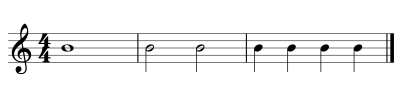
In most music a quarter note is one beat. Each value below is half as long as the one before it:
- whole note: four beats, a hollow head with no stem
- half note: two beats, a hollow head with a stem
- quarter note: one beat, a filled head with a stem
- eighth note: half a beat, a filled head with one flag, or one beam joining it to its neighbours
- sixteenth note: a quarter of a beat, two flags, or two beams

Rests
Each value has a rest of the same length: silence you count just as carefully as a note. The whole rest hangs down from the fourth line; the half rest sits on top of the middle line, like a hat. A whole rest also fills any bar that is silent from start to end, whatever the time signature.

Dots and ties
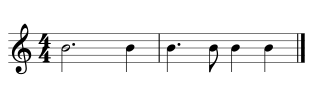
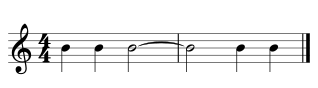
A dot after a note adds half its length again: a dotted half note is three beats (two beats and one more), and a dotted quarter is a beat and a half, so it is usually followed by an eighth note that finishes the beat. A tie is a curve joining two notes of the same pitch: play the first and hold it through the second, often across a bar line.
Triplets and notes off the beat
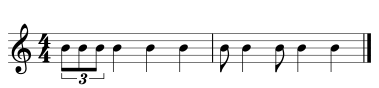
A 3 over three notes is a triplet: three notes in the time of two, so three triplet eighths share one beat. Later pieces also start notes between the beats and hold them across the next one (syncopation): count the "&" out loud and the note falls into place.
Count out loud
Say the beats as you play, at a speed where nothing has to hurry. With quarter notes: “1 2 3 4”. With eighths: “1 & 2 & 3 & 4 &”. With sixteenths: “1 e & a 2 e & a” and so on through the bar. A long note or a rest keeps counting; the count doesn't stop when your fingers do.
The trap
Reading the next note while holding a long one, it's easy to let go early or come in late. Count every beat of a held note or a rest, and practise a new rhythm on one key first: once the rhythm is sure, the notes are only one thing to read, not two. That's what the drill below does.
Now read them. A drill of the 10 rhythms in this guide: tap each card's rhythm on one key, of a MIDI keyboard or the keys on screen, in time. Every answer is checked against the beat and goes on your reading map.
Start the drill