How to read time signatures
A time signature is the two numbers at the start of the music, after the clef and key. The top number says how many beats are in each bar; the bottom number says which note value gets one beat.
The two numbers
- 4/4: four beats a bar, each a quarter note. Count “1 2 3 4”.
- 3/4: three beats a bar, each a quarter note. Count “1 2 3”.
- 6/8: six eighth notes a bar, felt as two beats of three, so each beat is a dotted quarter note. Count “1 & a 2 & a”.
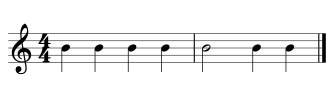
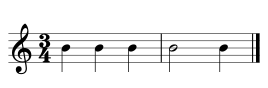
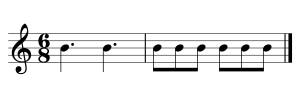
Bars and bar lines
Bar lines cut the music into bars, and every bar holds exactly what the time signature says, counting notes, dots, ties and rests together. That makes a bar a check on your reading: if your count doesn't come out at four in 4/4, a value was misread. The first beat of each bar is the strongest; feeling it is what keeps a piece from drifting.
The trap
3/4 and 6/8 both hold six eighth notes a bar, but they don't feel the same: 3/4 is three beats of two eighths (“1 & 2 & 3 &”), 6/8 is two beats of three (“1 & a 2 & a”). Look at the bottom number and at how the eighths are beamed: in 6/8 they come in threes.
Now read them. A drill of the 6 rhythms and times in this guide: tap each card's rhythm on one key, of a MIDI keyboard or the keys on screen, in time. Every answer is checked against the beat and goes on your reading map.
Start the drill