Romantic piano pieces
Music from about 1820 to 1900, from Schubert and Chopin to Brahms, Tchaikovsky and Grieg, written for a larger, louder piano and often for playing at home: short pieces with titles that say what they picture, songs without words, waltzes and nocturnes. Here are 107 pieces by 22 composers, easiest first. Each has easier versions made from the score itself (the right-hand melody alone, then with left-hand roots), so you can start a step down and play it as written later.
- Pieces
- 107
- Levels
- 2 to 7
- Key signatures
- 5 flats to 4 sharps
- Length
- 13 to 210 bars
Reading Romantic music
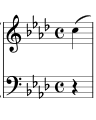
The sustaining pedal, marked under the bass staff: held through a harmony and changed with it, so the left hand's notes ring on under the tune.
Pieces here: Hunting Song, Op. 68 No. 7 (Schumann, level 3); Prelude in E minor, Op. 28 No. 4 (Chopin, level 4); Nocturne No. 10 (Field, level 4).
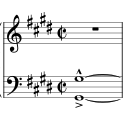
A left hand that travels: a low bass note, then a chord well above it, and back, two octaves or more across a phrase. Read the bass, then the chord as one shape, and let the pedal hold the bass while the hand moves.
Pieces here: Waltz, D. 969 No. 9 (Schubert, level 3); Prelude in A, Op. 28 No. 7 (Chopin, level 4); Ständchen (Serenade) (Schubert, level 4).
Rubato and the words that ask for it: the tempo slows (rit.) and comes back (a tempo) with the phrase. Clefsight grades against your own steady beat, so learn the notes steady first, then let the phrase breathe.
Pieces here: Arabesque, Op. 100 No. 2 (Burgmüller, level 3); Of Foreign Lands and Peoples, from Kinderszenen (Schumann, level 4); Waltz in B minor (Chopin, level 4).
Character pieces: short pieces with titles, many written for young players and for playing at home, in sets such as Schumann's Album for the Young, Tchaikovsky's Children's Album, Burgmüller's Op. 100 and Mendelssohn's Songs without Words.
Pieces here: The Wild Rider, Op. 68 No. 8 (Schumann, level 3); Old French Song, Op. 39 No. 16 (Tchaikovsky, level 3); Tender Flower, Op. 100 No. 10 (Burgmüller, level 3); Song Without Words in E, Op. 19 No. 1 (Mendelssohn, level 5).
What the scores print
Of each period's pieces in the library, the share whose score prints each kind of sign. Ornament signs fade after the Baroque, as composers wrote out what they wanted, and marks for loudness, pedal and speed grow through the Romantic period.
| Baroque 1600–1750 | Classical 1750–1820 | Romantic 1820–1900 | Early 20th century 1900–1945 | |
|---|---|---|---|---|
| Ornament signs (trill, mordent, turn) | 48% | 26% | 7% | 0% |
| Loud and soft (p, f, crescendo) | 20% | 60% | 78% | 67% |
| Pedal marks | 3% | 6% | 27% | 7% |
| Slowing and back (rit., a tempo) | 3% | 4% | 32% | 13% |
Level 2
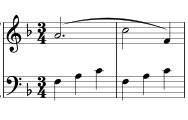
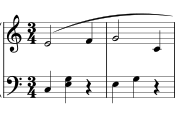
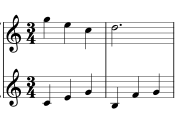
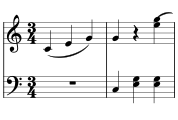
A tune over a simple left hand, mostly in one hand position.
Level 3
Both hands busy, the hand moves around, a sharp or flat or two.
-
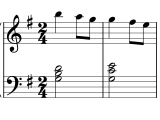 Écossaise in G
Franz Schubert 1 sharp, 2/4, 16 bars -
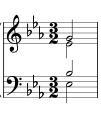 In stiller Nacht
Johannes Brahms 3 flats, 3/2, 17 bars -
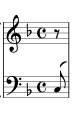 The Happy Farmer, Op. 68 No. 10
Robert Schumann 1 flat, 4/4, 21 bars -
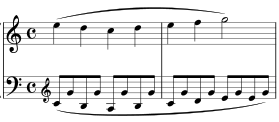 Humming Song, Op. 68 No. 3
Robert Schumann no sharps or flats, 4/4, 24 bars -
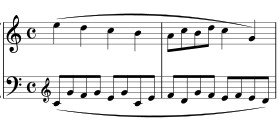 Melody, Op. 68 No. 1
Robert Schumann no sharps or flats, 4/4, 24 bars -
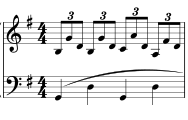 The Clear Stream, Op. 100 No. 7
Friedrich Burgmüller 1 sharp, 4/4, 24 bars -
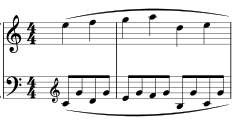 Little Piece, Op. 68 No. 5
Robert Schumann no sharps or flats, 4/4, 25 bars -
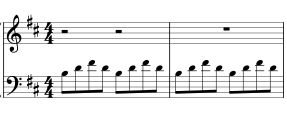 Swan Lake (theme)
Pyotr Ilyich Tchaikovsky 2 sharps, 4/4, 27 bars -
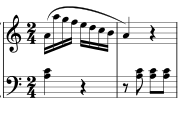 Allegretto, Op. 82
Cornelius Gurlitt no sharps or flats, 2/4, 32 bars -
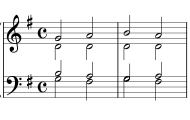 Chorale, Op. 68 No. 4
Robert Schumann 1 sharp, 4/4, 32 bars -
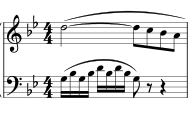 Gentle Complaint, Op. 100 No. 16
Friedrich Burgmüller 2 flats, 4/4, 32 bars -
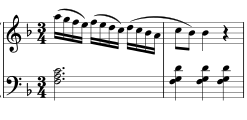 Innocence, Op. 100 No. 5
Friedrich Burgmüller 1 flat, 3/4, 32 bars -
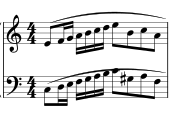 Progress, Op. 100 No. 6
Friedrich Burgmüller no sharps or flats, 4/4, 32 bars -
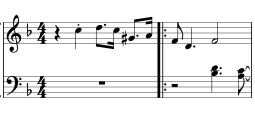 Aftenhvile i Leiren
Hanna Bergwitz-Goffeng 1 flat, 4/4, 33 bars -
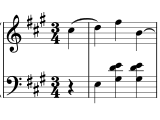 German Dance in A
Franz Schubert 3 sharps, 3/4, 33 bars -
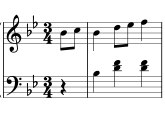 Ländler in B flat
Franz Schubert 2 flats, 3/4, 33 bars -
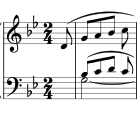 Old French Song, Op. 39 No. 16
Pyotr Ilyich Tchaikovsky 2 flats, 2/4, 33 bars -
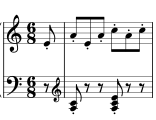 The Wild Rider, Op. 68 No. 8
Robert Schumann no sharps or flats, 6/8, 33 bars -
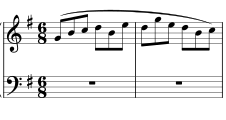 Pastorale, Op. 100 No. 3
Friedrich Burgmüller 1 sharp, 6/8, 37 bars -
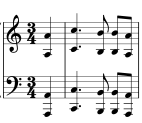 Waltz, D. 969 No. 9
Franz Schubert no sharps or flats, 3/4, 37 bars -
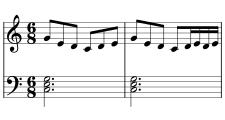 Morning Mood, from Peer Gynt
Edvard Grieg no sharps or flats, 6/8, 38 bars, shortened -
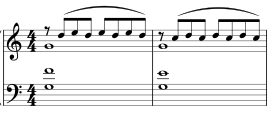 Consolation, Op. 100 No. 13
Friedrich Burgmüller no sharps or flats, 4/4, 42 bars -
 Farewell, Op. 100 No. 12
Friedrich Burgmüller no sharps or flats, 4/4, 42 bars -
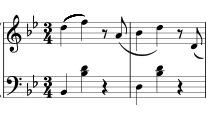 Träumerei
Cornelius Gurlitt 2 flats, 3/4, 44 bars -
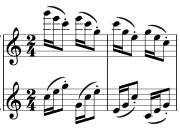 The Wagtail, Op. 100 No. 11
Friedrich Burgmüller no sharps or flats, 2/4, 45 bars -
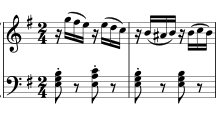 Restlessness, Op. 100 No. 18
Friedrich Burgmüller 1 sharp, 2/4, 46 bars -
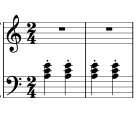 Arabesque, Op. 100 No. 2
Friedrich Burgmüller no sharps or flats, 2/4, 47 bars -
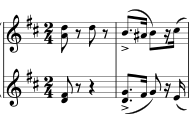 March of the Wooden Soldiers, Op. 39 No. 5
Pyotr Ilyich Tchaikovsky 2 sharps, 2/4, 48 bars -
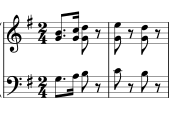 Soldiers' March, Op. 68 No. 2
Robert Schumann 1 sharp, 2/4, 48 bars -
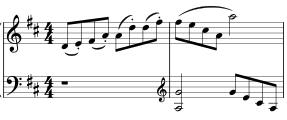 Tender Flower, Op. 100 No. 10
Friedrich Burgmüller 2 sharps, 4/4, 48 bars -
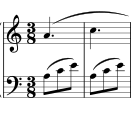 Song Without Words
Fritz Spindler no sharps or flats, 3/8, 49 bars -
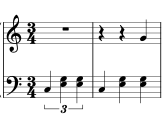 Brindisi, from La traviata
Giuseppe Verdi no sharps or flats, 3/4, 52 bars, shortened -
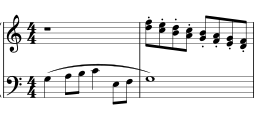 The Little Party, Op. 100 No. 4
Friedrich Burgmüller no sharps or flats, 4/4, 54 bars -
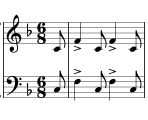 Hunting Song, Op. 68 No. 7
Robert Schumann 1 flat, 6/8, 57 bars -
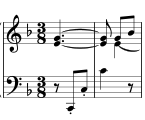 The Chatterbox, Op. 100 No. 17
Friedrich Burgmüller 1 flat, 3/8, 58 bars -
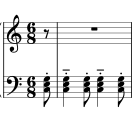 The Chase, Op. 100 No. 9
Friedrich Burgmüller no sharps or flats, 6/8, 65 bars -
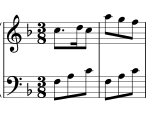 The Harebell
William Smallwood 1 flat, 3/8, 80 bars -
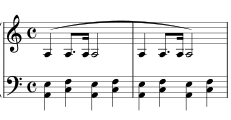 Funeral March, from the Sonata No. 2
Frédéric Chopin no sharps or flats, 4/4, 108 bars -
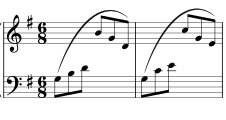 Little Study, Op. 68 No. 14
Robert Schumann 1 sharp, 6/8, 128 bars -
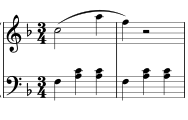 La Violette
Louis Gobbaerts 1 flat, 3/4, 132 bars
Level 4
Real independence between the hands and more accidentals.
-
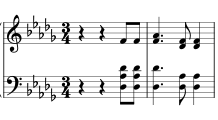 Lullaby (Wiegenlied), Op. 49 No. 4
Johannes Brahms 5 flats, 3/4, 17 bars -
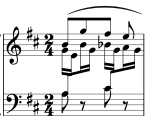 Pleading Child, from Kinderszenen
Robert Schumann 2 sharps, 2/4, 17 bars -
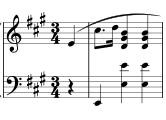 Prelude in A, Op. 28 No. 7
Frédéric Chopin 3 sharps, 3/4, 17 bars -
 Little Romance, Op. 68 No. 19
Robert Schumann no sharps or flats, 4/4, 21 bars -
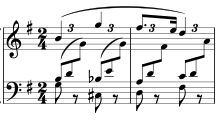 Of Foreign Lands and Peoples, from Kinderszenen
Robert Schumann 1 sharp, 2/4, 22 bars -
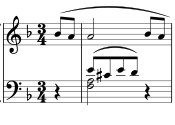 Prelude, Op. 40 No. 3
Anatoly Lyadov 1 flat, 3/4, 23 bars -
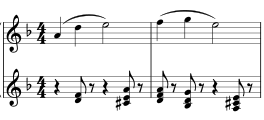 Folk Song, Op. 68 No. 9
Robert Schumann 1 flat, 4/4, 24 bars -
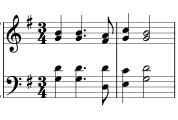 Morning Prayer, Op. 39 No. 1
Pyotr Ilyich Tchaikovsky 1 sharp, 3/4, 24 bars -
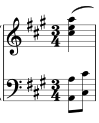 An Important Event, from Kinderszenen
Robert Schumann 3 sharps, 3/4, 25 bars -
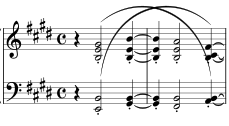 Consolation No. 1
Franz Liszt 4 sharps, 4/4, 25 bars -
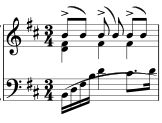 Prelude in B minor, Op. 28 No. 6
Frédéric Chopin 2 sharps, 3/4, 26 bars -
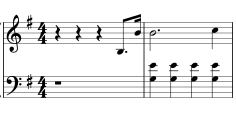 Prelude in E minor, Op. 28 No. 4
Frédéric Chopin 1 sharp, 4/4, 26 bars -
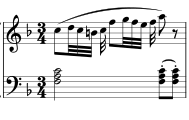 Grace, Op. 100 No. 8
Friedrich Burgmüller 1 flat, 3/4, 32 bars -
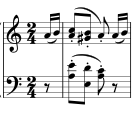 Poor Orphan Child, Op. 68 No. 6
Robert Schumann no sharps or flats, 2/4, 33 bars -
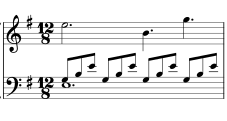 Nocturne No. 10
John Field 1 sharp, 12/8, 37 bars -
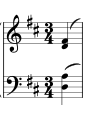 A Curious Story, from Kinderszenen
Robert Schumann 2 sharps, 3/4, 41 bars -
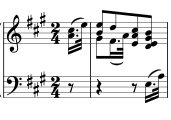 The Little Morning Wanderer, Op. 68 No. 17
Robert Schumann 3 sharps, 2/4, 42 bars -
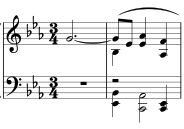 Nimrod, from the Enigma Variations
Edward Elgar 3 flats, 3/4, 44 bars -
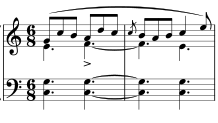 The Reaper's Song, Op. 68 No. 18
Robert Schumann no sharps or flats, 6/8, 44 bars -
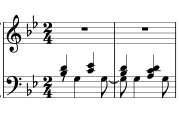 Song of the Lark, from The Seasons
Pyotr Ilyich Tchaikovsky 2 flats, 2/4, 46 bars -
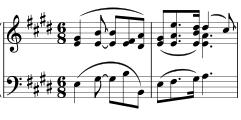 Spring Song, Op. 68 No. 15
Robert Schumann 4 sharps, 6/8, 46 bars -
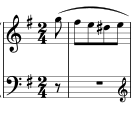 First Loss, Op. 68 No. 16
Robert Schumann 1 sharp, 2/4, 49 bars -
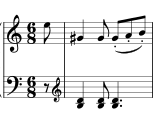 Sicilienne, Op. 68 No. 11
Robert Schumann no sharps or flats, 6/8, 49 bars -
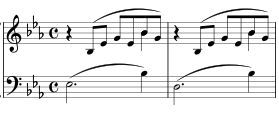 Mignon, Op. 68 No. 35
Robert Schumann 3 flats, 4/4, 61 bars -
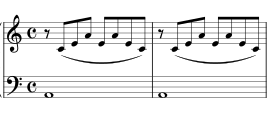 Sonatina in A minor
Carl Reinecke no sharps or flats, 4/4, 64 bars -
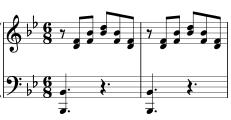 Ave Maria
Franz Schubert 2 flats, 6/8, 65 bars -
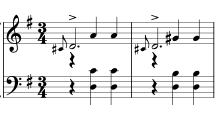 La Styrienne, Op. 100 No. 14
Friedrich Burgmüller 1 sharp, 3/4, 68 bars -
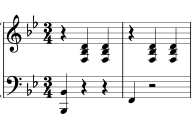 Valses poéticos No. 5
Enrique Granados 2 flats, 3/4, 68 bars -
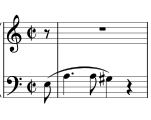 Fugue in A minor, B. 144
Frédéric Chopin no sharps or flats, 2/2, 70 bars -
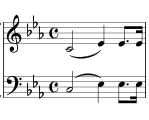 Funeral March in C minor, Op. 72
Frédéric Chopin 3 flats, 4/4, 76 bars -
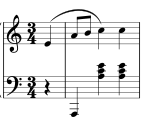 Waltz in A minor, B. 150
Frédéric Chopin no sharps or flats, 3/4, 81 bars -
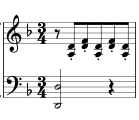 Ständchen (Serenade)
Franz Schubert 1 flat, 3/4, 82 bars -
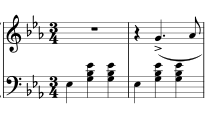 Waltz, Op. 39 No. 8
Pyotr Ilyich Tchaikovsky 3 flats, 3/4, 85 bars -
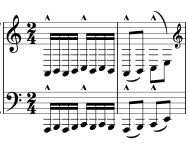 Knecht Ruprecht, Op. 68 No. 12
Robert Schumann no sharps or flats, 2/4, 112 bars -
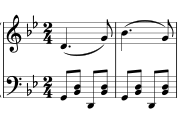 Hungarian Dance No. 5
Johannes Brahms 2 flats, 2/4, 142 bars -
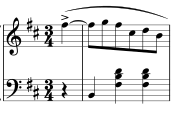 Waltz in B minor
Frédéric Chopin 2 sharps, 3/4, 177 bars
Level 5
The edge of early intermediate: dense textures, fast passages and far keys.
-
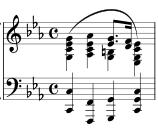 Prelude in C minor, Op. 28 No. 20
Frédéric Chopin 3 flats, 4/4, 13 bars -
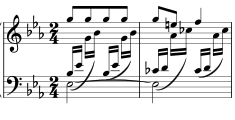 Arietta, Op. 12 No. 1
Edvard Grieg 3 flats, 2/4, 23 bars -
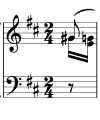 Happy Enough, from Kinderszenen
Robert Schumann 2 sharps, 2/4, 25 bars -
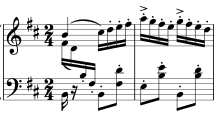 Blind Man's Buff, from Kinderszenen
Robert Schumann 2 sharps, 2/4, 32 bars -
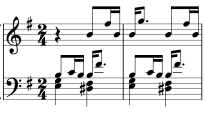 Child Falling Asleep, from Kinderszenen
Robert Schumann 1 sharp, 2/4, 32 bars -
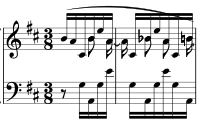 Prelude in D, Op. 28 No. 5
Frédéric Chopin 2 sharps, 3/8, 39 bars -
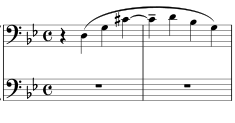 Nuages gris
Franz Liszt 2 flats, 4/4, 48 bars -
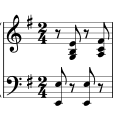 Dance of the Sugar Plum Fairy
Pyotr Ilyich Tchaikovsky 1 sharp, 2/4, 52 bars -
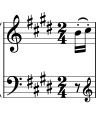 May, Lovely May, Op. 68 No. 13
Robert Schumann 4 sharps, 2/4, 53 bars -
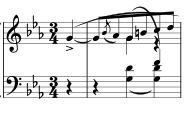 Mazurka in C minor, Op. 30 No. 1
Frédéric Chopin 3 flats, 3/4, 54 bars -
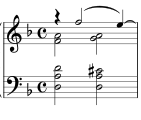 October: Autumn Song, Op. 37a No. 10
Pyotr Ilyich Tchaikovsky 1 flat, 4/4, 56 bars -
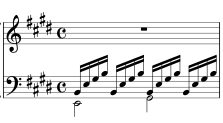 Song Without Words in E, Op. 19 No. 1
Felix Mendelssohn 4 sharps, 4/4, 62 bars -
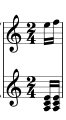 Echoes from the Theatre, Op. 68 No. 25
Robert Schumann no sharps or flats, 2/4, 63 bars -
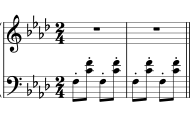 Moment musical in F minor, Op. 94 No. 3
Franz Schubert 4 flats, 2/4, 78 bars -
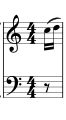 Song Without Words in A minor, Op. 53 No. 5
Felix Mendelssohn no sharps or flats, 4/4, 84 bars -
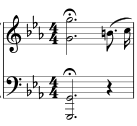 Impromptu in C minor, Op. 90 No. 1
Franz Schubert 3 flats, 4/4, 204 bars
Level 6
Intermediate: the notes of level 5 at concert speed, held even from the first bar to the last.
-
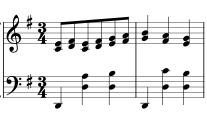 Waltz in G, Op. 39 No. 10
Johannes Brahms 1 sharp, 3/4, 32 bars -
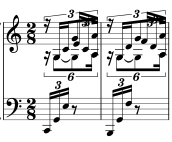 Prelude in C, Op. 28 No. 1
Frédéric Chopin no sharps or flats, 2/8, 34 bars -
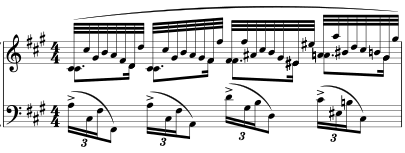 Prelude in F sharp minor, Op. 28 No. 8
Frédéric Chopin 3 sharps, 4/4, 34 bars -
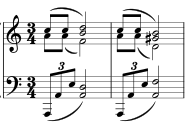 Intermezzo in A minor, Op. 116 No. 2
Johannes Brahms no sharps or flats, 3/4, 69 bars -
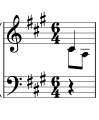 Song Without Words in F sharp minor, Op. 19 No. 5
Felix Mendelssohn 3 sharps, 6/4, 87 bars -
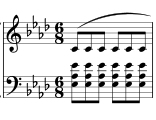 Prelude in A flat, Op. 28 No. 17
Frédéric Chopin 4 flats, 6/8, 90 bars -
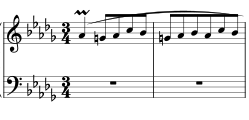 Waltz in D flat, Op. 64 No. 1
Frédéric Chopin 5 flats, 3/4, 140 bars
Level 7
Advanced: études and impromptus, fast and even in both hands for pages at a time, with cross-rhythms.
Composers
Each composer is placed in one period, by when they were writing; one whose working life spans two is placed where most histories place them.
- Robert Schumann 28
- Frédéric Chopin 17
- Friedrich Burgmüller 16
- Franz Schubert 8
- Pyotr Ilyich Tchaikovsky 8
- Johannes Brahms 5
- Felix Mendelssohn 4
- Cornelius Gurlitt 3
- Franz Liszt 3
- Louis Gobbaerts 2
- Edvard Grieg 2
- Franz Behr 1
- Hanna Bergwitz-Goffeng 1
- Edward Elgar 1
- John Field 1
- Enrique Granados 1
- Anatoly Lyadov 1
- Carl Reinecke 1
- William Smallwood 1
- Fritz Spindler 1
- Johann Strauss II 1
- Giuseppe Verdi 1
Schubert was Beethoven's younger contemporary in Vienna; histories place him with the Romantics, for his songs and short piano pieces.
John Field, who wrote the first nocturnes from 1812, is placed with the Romantics, for whom the nocturne became a favourite form.
Hymns, carols, popular songs, ragtime, teaching studies and traditional tunes aren't music of a period in this sense, so their composers aren't placed in one, and a hymn tune by a composer placed here is left out too. They have pages of their own: hymns, Christmas music, ragtime, studies and traditional tunes.
Other periods: Baroque piano pieces (1600–1750) · Classical period piano pieces (1750–1820) · Early 20th-century piano pieces (1900–1945)
Open a piece to print any of its versions free, or to play it at your MIDI keyboard with every note marked. New to reading? The level 2 sight-reading exercises are a good warm-up.