Classical period piano pieces
Music from about 1750 to 1820, the years of Haydn, Mozart, Clementi and Beethoven, when the piano took the harpsichord's place and composers began to write loud and soft into the music. Here are 72 pieces by 15 composers, easiest first. Each has easier versions made from the score itself (the right-hand melody alone, then with left-hand roots), so you can start a step down and play it as written later.
- Pieces
- 72
- Levels
- 2 to 6
- Key signatures
- 4 flats to 4 sharps
- Length
- 8 to 418 bars
Reading Classical music
A tune and its accompaniment: the right hand sings, the left keeps the harmony, often as an Alberti bass, a chord broken bottom, top, middle, top. Read the chord, not four notes.
Pieces here: Sonatina in C, Op. 20 No. 1: Allegro (Kuhlau, level 3); Sonatina in G (Attwood, level 3); Sonata in C, K. 545: I (Wolfgang Amadeus Mozart, level 5).
Phrases you can see: four bars that ask and four that answer, each ending on a cadence you can hear coming.
Pieces here: Minuet in F, K. 2 (Wolfgang Amadeus Mozart, level 3); Écossaise in G (Beethoven, level 3).
Loud and soft written in: p and f, crescendos and sudden accents (sf), which the new piano could play by touch.
Pieces here: Sonatina in C, Op. 36 No. 1: I (Clementi, level 3); Sonatina in C, Op. 36 No. 3: II (Clementi, level 3); Sonatina in F, Anh. 5 (Beethoven, level 3).
Forms that return: the rondo, whose tune comes back between episodes, the minuet and trio, and the theme and variations.
Pieces here: Little Rondo (Türk, level 3); Minuet and Trio in G, K. 1 (Wolfgang Amadeus Mozart, level 3); Ah vous dirai-je, Maman: Variation I (Wolfgang Amadeus Mozart, level 3); Rondo alla turca (Turkish March) (Wolfgang Amadeus Mozart, level 3).
What the scores print
Of each period's pieces in the library, the share whose score prints each kind of sign. Ornament signs fade after the Baroque, as composers wrote out what they wanted, and marks for loudness, pedal and speed grow through the Romantic period.
| Baroque 1600–1750 | Classical 1750–1820 | Romantic 1820–1900 | Early 20th century 1900–1945 | |
|---|---|---|---|---|
| Ornament signs (trill, mordent, turn) | 48% | 26% | 7% | 0% |
| Loud and soft (p, f, crescendo) | 20% | 60% | 78% | 67% |
| Pedal marks | 3% | 6% | 27% | 7% |
| Slowing and back (rit., a tempo) | 3% | 4% | 32% | 13% |
Level 2
A tune over a simple left hand, mostly in one hand position.
-
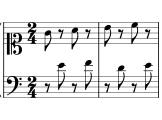 Allegro in C, K. 1b
Wolfgang Amadeus Mozart no sharps or flats, 2/4, 12 bars -
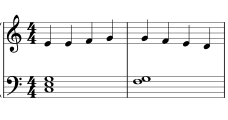 Ode to Joy
Ludwig van Beethoven no sharps or flats, 4/4, 16 bars -
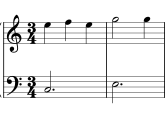 Theme from the Sonata in A, K. 331
Wolfgang Amadeus Mozart no sharps or flats, 3/4, 16 bars -
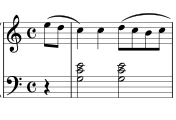 Papageno's Aria, from The Magic Flute
Wolfgang Amadeus Mozart no sharps or flats, 4/4, 23 bars -
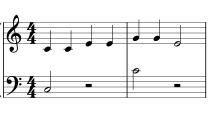 Theme from the Surprise Symphony
Joseph Haydn no sharps or flats, 4/4, 24 bars -
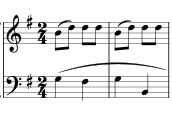 Air from Little Russia, Op. 107 No. 3
Ludwig van Beethoven 1 sharp, 2/4, 32 bars -
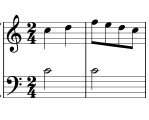 Allegro in C
Alexander Reinagle no sharps or flats, 2/4, 32 bars -
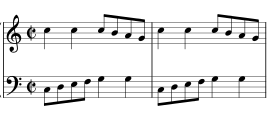 Gavotte
James Hook no sharps or flats, 4/4, 32 bars -
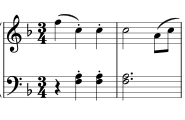 Minuet in F
Leopold Mozart 1 flat, 3/4, 32 bars
Level 3
Both hands busy, the hand moves around, a sharp or flat or two.
-
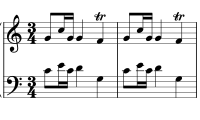 Andante in C, K. 1a
Wolfgang Amadeus Mozart no sharps or flats, 3/4, 8 bars -
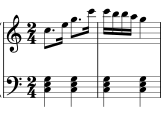 Gypsy Dance
Joseph Haydn no sharps or flats, 2/4, 16 bars -
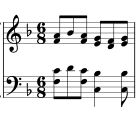 Wiegenlied (Lullaby)
Bernhard Flies 1 flat, 6/8, 16 bars -
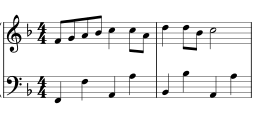 Burlesque in F
Leopold Mozart 1 flat, 4/4, 17 bars -
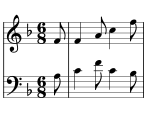 Komm, lieber Mai
Wolfgang Amadeus Mozart 1 flat, 6/8, 17 bars -
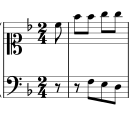 Allegro in F, K. 1c
Wolfgang Amadeus Mozart 1 flat, 2/4, 25 bars -
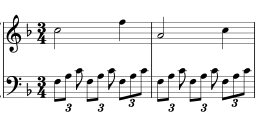 Sonatina in C, Op. 36 No. 1: II
Muzio Clementi 1 flat, 3/4, 26 bars -
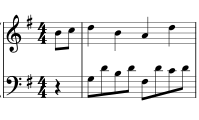 Sonatina in G
Thomas Attwood 1 sharp, 4/4, 28 bars -
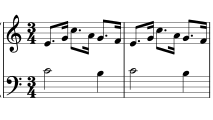 Sonatina in G, Op. 36 No. 2: II
Muzio Clementi no sharps or flats, 3/4, 28 bars -
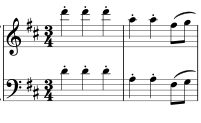 German Dance in D
Joseph Haydn 2 sharps, 3/4, 32 bars -
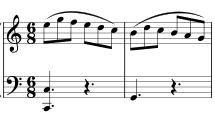 Giga
Giga
Samuel Arnold no sharps or flats, 6/8, 32 bars -
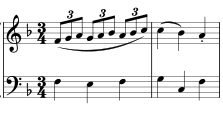 Minuet in F, K. 5
Wolfgang Amadeus Mozart 1 flat, 3/4, 32 bars -
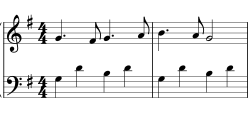 Sonatina in C, Op. 36 No. 3: II
Muzio Clementi 1 sharp, 4/4, 32 bars -
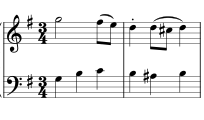 Tedesca
Joseph Haydn 1 sharp, 3/4, 32 bars -
 Écossaise in G
Ludwig van Beethoven 1 sharp, 2/4, 33 bars -
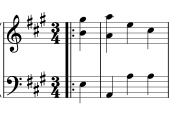 Minuet in A, Hob. IX:8 No. 6
Joseph Haydn 3 sharps, 3/4, 33 bars -
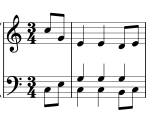 Minuet in C, K. 1f
Wolfgang Amadeus Mozart no sharps or flats, 3/4, 33 bars -
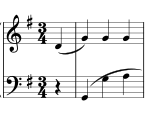 Minuet in G
Joseph Haydn 1 sharp, 3/4, 33 bars -
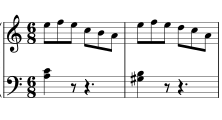 Presto, from the Sonata in A minor
Georg Benda no sharps or flats, 6/8, 36 bars -
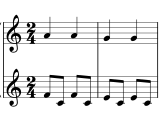 Little Rondo
Daniel Gottlob Türk no sharps or flats, 2/4, 40 bars -
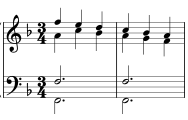 Minuet in F, K. 1d
Wolfgang Amadeus Mozart 1 flat, 3/4, 40 bars -
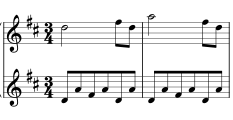 Minuet in D, K. 7
Wolfgang Amadeus Mozart 2 sharps, 3/4, 44 bars -
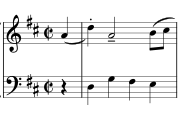 March in D
Carl Philipp Emanuel Bach 2 sharps, 2/2, 45 bars -
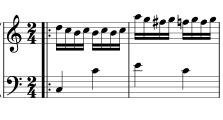 Ah vous dirai-je, Maman: Variation I
Wolfgang Amadeus Mozart no sharps or flats, 2/4, 48 bars -
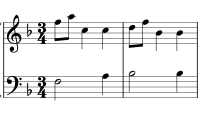 Minuet in F, K. 2
Wolfgang Amadeus Mozart 1 flat, 3/4, 48 bars -
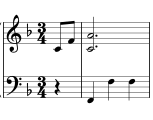 German Dance in F
Ludwig van Beethoven 1 flat, 3/4, 50 bars -
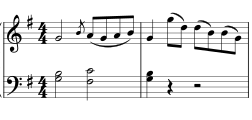 Sonatina in G, Anh. 5
Ludwig van Beethoven 1 sharp, 4/4, 50 bars -
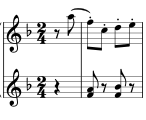 Allegro scherzando in F
Joseph Haydn 1 flat, 2/4, 54 bars -
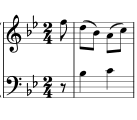 Allegro in B flat, K. 3
Wolfgang Amadeus Mozart 2 flats, 2/4, 61 bars -
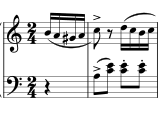 Rondo alla turca (Turkish March)
Wolfgang Amadeus Mozart no sharps or flats, 2/4, 65 bars, shortened -
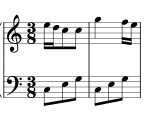 Sonatina in C, Op. 36 No. 1: III
Muzio Clementi no sharps or flats, 3/8, 70 bars -
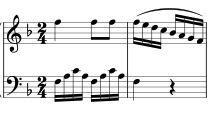 Sonatina in F, Anh. 5
Ludwig van Beethoven 1 flat, 2/4, 71 bars -
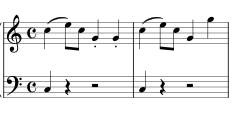 Sonatina in C, Op. 36 No. 1: I
Muzio Clementi no sharps or flats, 4/4, 76 bars -
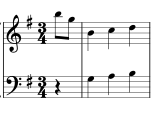 Minuet and Trio in G, K. 1
Wolfgang Amadeus Mozart 1 sharp, 3/4, 81 bars -
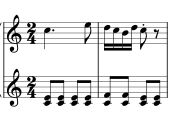 Sonatina in C, Op. 36 No. 3: III
Muzio Clementi no sharps or flats, 2/4, 82 bars -
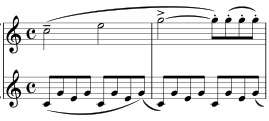 Sonatina in C, Op. 20 No. 1: Allegro
Friedrich Kuhlau no sharps or flats, 4/4, 111 bars -
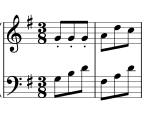 Sonatina in G, Op. 36 No. 2: III
Muzio Clementi 1 sharp, 3/8, 111 bars -
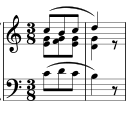 Lustig – Traurig, WoO 54
Ludwig van Beethoven no sharps or flats, 3/8, 114 bars -
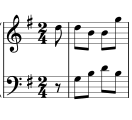 Sonatina in G, Op. 36 No. 2: I
Muzio Clementi 1 sharp, 2/4, 119 bars -
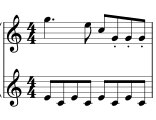 Sonatina in C, Op. 36 No. 3: I
Muzio Clementi no sharps or flats, 4/4, 128 bars
Level 4
Real independence between the hands and more accidentals.
-
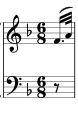 Sonatina in C, Op. 20 No. 1: Andante
Friedrich Kuhlau 1 flat, 6/8, 25 bars -
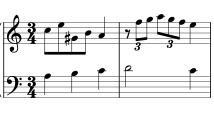 Minore in A minor, K. 15k
Wolfgang Amadeus Mozart no sharps or flats, 3/4, 36 bars -
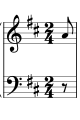 Andante in D, K. 15o
Wolfgang Amadeus Mozart 2 sharps, 2/4, 46 bars -
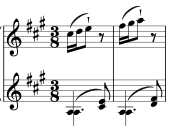 Scherzo in A
Johann Nepomuk Hummel 3 sharps, 3/8, 74 bars -
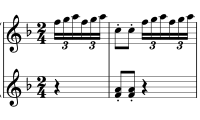 Sonatina in F, Op. 36 No. 4: III
Muzio Clementi 1 flat, 2/4, 79 bars -
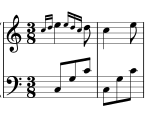 Sonatina in G, Op. 36 No. 5: II
Muzio Clementi no sharps or flats, 3/8, 82 bars -
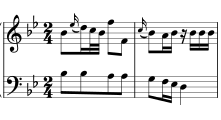 Andante in B flat, K. 15ii
Wolfgang Amadeus Mozart 2 flats, 2/4, 86 bars -
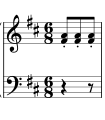 Sonatina in D, Op. 36 No. 6: II
Muzio Clementi 2 sharps, 6/8, 88 bars -
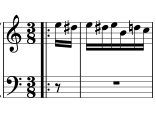 Für Elise, WoO 59
Ludwig van Beethoven no sharps or flats, 3/8, 126 bars -
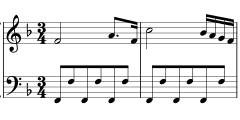 Sonatina in F, Op. 36 No. 4: I
Muzio Clementi 1 flat, 3/4, 142 bars -
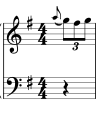 Sonatina in G, Op. 36 No. 5: I
Muzio Clementi 1 sharp, 4/4, 169 bars -
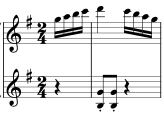 Sonatina in G, Op. 36 No. 5: III
Muzio Clementi 1 sharp, 2/4, 172 bars -
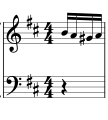 Sonatina in D, Op. 36 No. 6: I
Muzio Clementi 2 sharps, 4/4, 181 bars
Level 5
The edge of early intermediate: dense textures, fast passages and far keys.
-
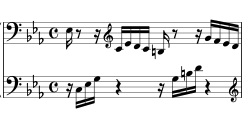 Solfeggietto in C minor
Carl Philipp Emanuel Bach 3 flats, 4/4, 35 bars -
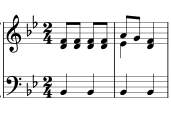 Sonatina in F, Op. 36 No. 4: II
Muzio Clementi 2 flats, 2/4, 46 bars -
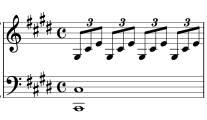 Moonlight Sonata: I
Ludwig van Beethoven 4 sharps, 4/4, 69 bars -
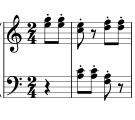 Sonata in C, K. 545: III
Wolfgang Amadeus Mozart no sharps or flats, 2/4, 82 bars -
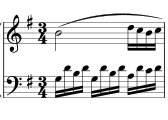 Sonata in C, K. 545: II
Wolfgang Amadeus Mozart 1 sharp, 3/4, 106 bars -
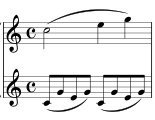 Sonata in C, K. 545: I
Wolfgang Amadeus Mozart no sharps or flats, 4/4, 146 bars -
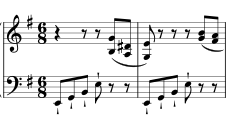 Sonata in E minor, Hob. XVI:34: I
Joseph Haydn 1 sharp, 6/8, 254 bars
Level 6
Intermediate: the notes of level 5 at concert speed, held even from the first bar to the last.
Composers
Each composer is placed in one period, by when they were writing; one whose working life spans two is placed where most histories place them.
- Wolfgang Amadeus Mozart 23
- Muzio Clementi 17
- Ludwig van Beethoven 10
- Joseph Haydn 8
- Carl Philipp Emanuel Bach 2
- Friedrich Kuhlau 2
- Leopold Mozart 2
- Samuel Arnold 1
- Thomas Attwood 1
- Georg Benda 1
- Bernhard Flies 1
- James Hook 1
- Johann Nepomuk Hummel 1
- Alexander Reinagle 1
- Daniel Gottlob Türk 1
Clementi lived until 1832, but his sonatinas and most of his music belong to the Classical period.
Beethoven is placed with the Classical period, as most histories place him; his later music opened the way to the Romantics.
C. P. E. Bach, J. S. Bach's son, is placed with the Classical period, whose style his music helped to begin.
Kuhlau wrote his sonatinas in the 1810s and 1820s in the Classical style of Clementi's, and they are taught with them.
Hummel, Mozart's pupil, lived until 1837 and kept to the Classical style he learned from him.
Hymns, carols, popular songs, ragtime, teaching studies and traditional tunes aren't music of a period in this sense, so their composers aren't placed in one, and a hymn tune by a composer placed here is left out too. They have pages of their own: hymns, Christmas music, ragtime, studies and traditional tunes.
Other periods: Baroque piano pieces (1600–1750) · Romantic piano pieces (1820–1900) · Early 20th-century piano pieces (1900–1945)
Open a piece to print any of its versions free, or to play it at your MIDI keyboard with every note marked. New to reading? The level 2 sight-reading exercises are a good warm-up.