Piano finger numbers
A small number by a note says which finger plays it. Both hands count from the thumb: 1 is the thumb, 2 the index finger, 3 the middle, 4 the ring finger and 5 the little finger. Of the 341 pieces in Clefsight's library, 118 print finger numbers, 11,371 of them in all.
Left hand
- 1 thumb1,055
- 2 index finger872
- 3 middle finger784
- 4 ring finger560
- 5 little finger806
Right hand
- 1 thumb1,909
- 2 index finger1,531
- 3 middle finger1,558
- 4 ring finger1,234
- 5 little finger1,062
The same numbers in both hands
The thumbs are both 1, so the numbers run in opposite directions on the keyboard: up from the thumb in the right hand, down from it in the left. A run going up in the right hand is 1 2 3; the same notes in the left hand are 3 2 1. Saying the numbers aloud with your hands on the keys is the quickest way to learn them.
A five-finger position puts one finger over each of five keys next to each other. These are the first ones most beginners learn, and the ones the worksheet uses:
| Position | Keys and fingers |
|---|---|
| Right hand, C positiontreble staff | C 1 D 2 E 3 F 4 G 5 |
| Left hand, C positionbass staff | C 5 D 4 E 3 F 2 G 1 |
| Right hand, G positiontreble staff | G 1 A 2 B 3 C 4 D 5 |
| Left hand, G positionbass staff | G 5 A 4 B 3 C 2 D 1 |
Where the numbers go on the page
On a piano score the right hand's numbers usually sit over its staff and the left hand's under its own, so each stays close to its hand's notes. Of the 7,294 numbers on the right hand's staff in the library, 7,037 (96 %) are printed above it; of the 4,077 on the left hand's, 3,356 (82 %) are below it, the rest between the staves.
The bars below are engraved from library pieces as their editions print them; the numbers each one is about are pencilled blue.
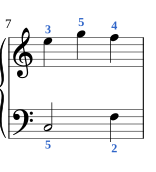
Here the right hand's numbers sit over its staff and the left hand's under its own. From Theme from the Sonata in A, K. 331 (Mozart, level 2).
Printed in 67 of the 118 pieces with fingering; the easiest: Theme from the Sonata in A, K. 331 (Mozart, level 2), Berceuse, from Enfantillages pittoresques (Satie, level 2) and Gavotte (Telemann, level 2).
A chord gets a number for each of its notes, stacked in the same order as the notes, so the top number is the top note's finger. Not every note is numbered: an edition prints a number where the hand has to move or the choice isn't obvious, and in between the fingers follow on from the last number, one key each.
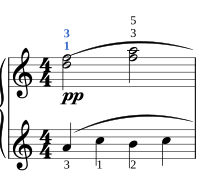
Here the right hand's chord fingered 3 over 1, a number for each note, stacked in the same order as the notes. From Berceuse, from Enfantillages pittoresques (Satie, level 2).
Printed in 62 of the 118 pieces with fingering; the easiest: Berceuse, from Enfantillages pittoresques (Satie, level 2), Oh! Susanna (Foster, level 2) and Elementary Study, Op. 176 No. 1 (Duvernoy, level 2).
Moving the hand: thumb under and finger over
Five fingers cover five keys. To go further without a jump, the thumb tucks under the hand to the next key, and on the way back a finger crosses over the thumb. Scales are played this way, and editions print the numbers where it happens.
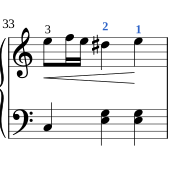
Thumb under: the right hand plays D♯ with 2, then the thumb passes under it to play E, going up. From Brindisi, from La traviata (Verdi, level 3).
Printed in 63 of the 118 pieces with fingering; the easiest: Brindisi, from La traviata (Verdi, level 3), Chorale, Op. 68 No. 4 (Schumann, level 3) and The Wagtail, Op. 100 No. 11 (Burgmüller, level 3).
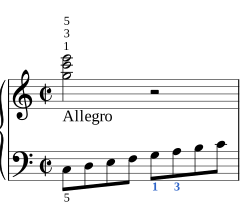
Finger over: the left hand plays G with the thumb, then 3 crosses over it to play A, going up. From Children's Study, Op. 37 No. 2 (Lemoine, level 2).
Printed in 68 of the 118 pieces with fingering; the easiest: Children's Study, Op. 37 No. 2 (Lemoine, level 2), Air from Little Russia, Op. 107 No. 3 (Beethoven, level 2) and Chorale, Op. 68 No. 4 (Schumann, level 3).
Changing finger on a held key
Two numbers joined on one note, such as 4–5, mean play the key with the first finger, then swap to the second while holding it down, so the hand is ready for what comes next without a break in the sound. It belongs to slow, joined-up playing, and it is the rarest of these in the library: 5 pieces print it.
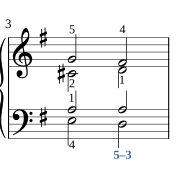
The left hand takes D with 5, then changes to 3 on the same key without letting it go: 5–3. From Chorale, Op. 68 No. 4 (Schumann, level 3).
Printed in 5 of the 118 pieces with fingering; the easiest: Chorale, Op. 68 No. 4 (Schumann, level 3), First Loss, Op. 68 No. 16 (Schumann, level 4) and Little Romance, Op. 68 No. 19 (Schumann, level 4).
Staying in one position
Much easy music keeps a hand in one five-finger position for a whole phrase. The edition then only needs a number or two: once one finger is on its key, the others are over theirs.
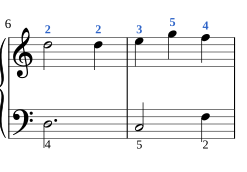
The right hand stays over C, D, E, F and G, one finger for each key, thumb on C: every number printed is that key's finger. From Theme from the Sonata in A, K. 331 (Mozart, level 2).
Printed in 63 of the 118 pieces with fingering; the easiest: Theme from the Sonata in A, K. 331 (Mozart, level 2), Berceuse, from Enfantillages pittoresques (Satie, level 2) and Rule, Britannia! (Arne, level 2).
Whose fingering is it?
The numbers in the library are the ones in each score's source: the editor's or the arranger's choice, printed as they gave it. Clefsight doesn't change or check them. They are a good way that worked for someone, not the only one: hands differ, and a teacher may change a number to fit yours. Clefsight hears which key you play, not which finger, so a different fingering is never marked wrong.
Pieces with fingering printed
The 118 library pieces that print finger numbers, by level and easiest first, with how many numbers each prints. Every piece prints in any of its versions from its page, the numbers with it.
Level 29 of 34 pieces
- Theme from the Sonata in A, K. 331Mozart · 55 numbers
- Berceuse, from Enfantillages pittoresquesSatie · 197 numbers
- Rule, Britannia!Arne · 11 numbers
- Elementary Study, Op. 176 No. 3Duvernoy · 19 numbers
- GavotteTelemann · 28 numbers
- Oh! SusannaFoster · 17 numbers
- Elementary Study, Op. 176 No. 1Duvernoy · 12 numbers
- Children's Study, Op. 37 No. 2Lemoine · 74 numbers
- Air from Little Russia, Op. 107 No. 3Beethoven · 19 numbers
Level 363 of 183 pieces
- Brindisi, from La traviataVerdi · 46 numbers
- Soldiers' March, Op. 68 No. 2Schumann · 41 numbers
- Chorale, Op. 68 No. 4Schumann · 111 numbers
- The Little Party, Op. 100 No. 4Burgmüller · 10 numbers
- Sonatina in G, Anh. 5Beethoven · 99 numbers
- Melody, Op. 68 No. 1Schumann · 54 numbers
- The Wagtail, Op. 100 No. 11Burgmüller · 39 numbers
- Arabesque, Op. 100 No. 2Burgmüller · 6 numbers
- Humming Song, Op. 68 No. 3Schumann · 31 numbers
- Children's Study, Op. 37 No. 1Lemoine · 69 numbers
- Little Piece, Op. 68 No. 5Schumann · 31 numbers
- Children's Study, Op. 37 No. 14Lemoine · 169 numbers
- Santa Lucia (Neapolitan air)Czerny · 56 numbers
- Study in ThirdsCzerny · 177 numbers
- Little DanceTelemann · 51 numbers
- Short Exercise, Op. 821 No. 17Czerny · 55 numbers
- Short Exercise, Op. 821 No. 4Czerny · 46 numbers
- Consolation, Op. 100 No. 13Burgmüller · 43 numbers
- Pastorale, Op. 100 No. 3Burgmüller · 7 numbers
- Short Exercise, Op. 821 No. 3Czerny · 55 numbers
- March from ScipioHandel · 86 numbers
- Presto, from the Sonata in A minorBenda · 83 numbers
- The Chase, Op. 100 No. 9Burgmüller · 53 numbers
- Short Exercise, Op. 821 No. 2Czerny · 29 numbers
- The Reaper's Song, Op. 68 No. 18Schumann · 77 numbers
- Allegretto, Op. 82Gurlitt · 28 numbers
- Farewell, Op. 100 No. 12Burgmüller · 83 numbers
- Short Exercise, Op. 821 No. 5Czerny · 68 numbers
- The Wild Rider, Op. 68 No. 8Schumann · 50 numbers
- Progress, Op. 100 No. 6Burgmüller · 83 numbers
- Children's Study, Op. 37 No. 19Lemoine · 159 numbers
- Children's Study, Op. 37 No. 4Lemoine · 106 numbers
- The Happy Farmer, Op. 68 No. 10Schumann · 50 numbers
- Elementary Study, Op. 176 No. 7Duvernoy · 92 numbers
- The Clear Stream, Op. 100 No. 7Burgmüller · 78 numbers
- Children's Study, Op. 37 No. 17Lemoine · 71 numbers
- Children's Study, Op. 37 No. 35Lemoine · 111 numbers
- Children's Study, Op. 37 No. 5Lemoine · 50 numbers
- Gentle Complaint, Op. 100 No. 16Burgmüller · 54 numbers
- Hunting Song, Op. 68 No. 7Schumann · 105 numbers
- The School of Velocity, Op. 299 No. 1Czerny · 152 numbers
- Short Exercise, Op. 821 No. 1Czerny · 62 numbers
- Restlessness, Op. 100 No. 18Burgmüller · 38 numbers
- Children's Study, Op. 37 No. 29Lemoine · 81 numbers
- Children's Study, Op. 37 No. 6Lemoine · 13 numbers
- Tender Flower, Op. 100 No. 10Burgmüller · 66 numbers
- Innocence, Op. 100 No. 5Burgmüller · 32 numbers
- Study, Op. 599 No. 63Czerny · 64 numbers
- Short Exercise, Op. 821 No. 9Czerny · 29 numbers
- Children's Study, Op. 37 No. 12Lemoine · 142 numbers
- Children's Study, Op. 37 No. 28Lemoine · 379 numbers
- Short Exercise, Op. 821 No. 16Czerny · 39 numbers
- Rondo alla turca (Turkish March)Mozart · 66 numbers
- Short Exercise, Op. 821 No. 12Czerny · 50 numbers
- Children's Study, Op. 37 No. 30Lemoine · 150 numbers
- Children's Study, Op. 37 No. 22Lemoine · 198 numbers
- Little Study, Op. 68 No. 14Schumann · 61 numbers
- The Chatterbox, Op. 100 No. 17Burgmüller · 81 numbers
- March of the Wooden Soldiers, Op. 39 No. 5Tchaikovsky · 87 numbers
- Children's Study, Op. 37 No. 49Lemoine · 355 numbers
- Children's Study, Op. 37 No. 45Lemoine · 164 numbers
- Children's Study, Op. 37 No. 7Lemoine · 154 numbers
- Short Exercise, Op. 821 No. 10Czerny · 35 numbers
Level 442 of 100 pieces
- Short Exercise, Op. 821 No. 19Czerny · 5 numbers
- Of Foreign Lands and Peoples, from KinderszenenSchumann · 25 numbers
- Children's Study, Op. 37 No. 38Lemoine · 123 numbers
- Short Exercise, Op. 821 No. 18Czerny · 25 numbers
- Sonata in C, K. 545: IMozart · 83 numbers
- Study for the Fifth FingerGermer · 55 numbers
- Children's Study, Op. 37 No. 15Lemoine · 142 numbers
- Short Exercise, Op. 821 No. 13Czerny · 40 numbers
- Little Prelude in C, BWV 924Bach · 61 numbers
- Short Exercise, Op. 821 No. 14Czerny · 30 numbers
- Children's Study, Op. 37 No. 16Lemoine · 72 numbers
- The School of Velocity, Op. 299 No. 5Czerny · 338 numbers
- Little Prelude in C, BWV 933Bach · 251 numbers
- First Loss, Op. 68 No. 16Schumann · 62 numbers
- La Styrienne, Op. 100 No. 14Burgmüller · 42 numbers
- Little Romance, Op. 68 No. 19Schumann · 90 numbers
- The School of Velocity, Op. 299 No. 6Czerny · 266 numbers
- Morning Prayer, Op. 39 No. 1Tchaikovsky · 50 numbers
- Waltz, Op. 39 No. 8Tchaikovsky · 174 numbers
- Children's Study, Op. 37 No. 40Lemoine · 91 numbers
- Children's Study, Op. 37 No. 42Lemoine · 128 numbers
- Little Prelude in D minor, BWV 935Bach · 348 numbers
- The School of Velocity, Op. 299 No. 9Czerny · 410 numbers
- Short Exercise, Op. 821 No. 7Czerny · 61 numbers
- Sonata in C, K. 545: IIMozart · 274 numbers
- Children's Study, Op. 37 No. 21Lemoine · 110 numbers
- Children's Study, Op. 37 No. 32Lemoine · 277 numbers
- Children's Study, Op. 37 No. 34Lemoine · 184 numbers
- Knecht Ruprecht, Op. 68 No. 12Schumann · 192 numbers
- Short Exercise, Op. 821 No. 6Czerny · 27 numbers
- Children's Study, Op. 37 No. 39Lemoine · 168 numbers
- The Little Morning Wanderer, Op. 68 No. 17Schumann · 113 numbers
- Grace, Op. 100 No. 8Burgmüller · 43 numbers
- Sicilienne, Op. 68 No. 11Schumann · 89 numbers
- Sonata in C, K. 545: IIIMozart · 152 numbers
- Spring Song, Op. 68 No. 15Schumann · 141 numbers
- Short Exercise, Op. 821 No. 8Czerny · 75 numbers
- Short Exercise, Op. 821 No. 15Czerny · 33 numbers
- Children's Study, Op. 37 No. 33Lemoine · 85 numbers
- Short Exercise, Op. 821 No. 11Czerny · 29 numbers
- Children's Study, Op. 37 No. 43Lemoine · 143 numbers
- An Important Event, from KinderszenenSchumann · 1 number
Level 54 of 24 pieces
- May, Lovely May, Op. 68 No. 13Schumann · 175 numbers
- Children's Study, Op. 37 No. 50Lemoine · 107 numbers
- Arietta, Op. 12 No. 1Grieg · 69 numbers
- Sonata in E, K. 531Scarlatti · 270 numbers
Read the notes under your fingers. A drill of the notes of the first positions and the landmarks on the grand staff, played on a MIDI keyboard or the keys on screen as soon as you read them. On paper: a finger numbers worksheet, with the answers on a second page.
Start the drillMore on the page: music symbols and what they mean, and how to read piano sheet music for the notes themselves.