Piano scales and the circle of fifths
A scale is the eight notes from a key's first note up to the same letter an octave higher, one letter after another. Every key signature belongs to one major scale and one minor scale, and the circle of fifths puts all of them in order, one sharp or one flat at a time.
The circle of fifths
Start at C, at the top, with no sharps or flats. Going clockwise, each key starts on the 5th note of the scale before it (count five letters: C, D, E, F, G) and adds one sharp. Going anticlockwise, each key is a 5th lower and adds one flat. Round the outside is each key's signature; inside the ring is the minor key that shares it (Em is E minor). The numbers in pencil are how many of Clefsight's 341 library pieces are written with that signature.
At the bottom, three keys have two names: B or C♭, F♯ or G♭ and C♯ or D♭. Each pair plays the same piano keys, written two ways, and music uses whichever is easier to read. In the library, the commonest signatures are no sharps or flats (109 pieces), 1 sharp (60 pieces) and 1 flat (54 pieces), and 94% of pieces use 3 or fewer sharps or flats. None use 5 sharps, 5 flats, 6 sharps, 7 sharps or 7 flats.
How a major scale is built
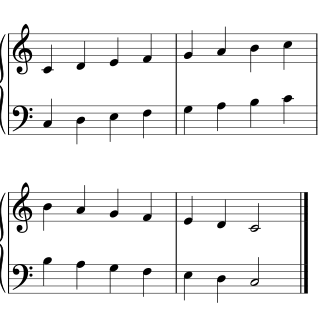
Play C to C on the white keys and you have the C major scale: C, D, E, F, G, A, B, C. The distance from one note to the next is a half step (the very next key, black or white) or a whole step (two half steps, skipping one key). C major goes:
wholeC–DwholeD–EhalfE–FwholeF–GwholeG–AwholeA–BhalfB–C
Every major scale has that same pattern, whatever note it starts on. Start anywhere but C and some steps land on black keys: that is what the key signature is for. G major needs F♯ to keep the pattern; D major needs F♯ and C♯.
Finding the key from the signature
- Sharps: the last sharp is the 7th note of the major scale, a half step below the key note. So the key is the next letter up: last sharp G♯, key A major.
- Flats: the second-to-last flat is the key. B♭, E♭ and A♭: E♭ major. One flat is the one to learn by heart: F major.
- The minor key: start on the 6th note of the major scale, a 3rd below the key note (count three letters down: C, B and A). C major's is A minor; G major's is E minor.
Sharps always come in the order F C G D A E B and flats in the order B E A D G C F: more on that in the key signatures guide.
Minor scales
A minor key shares its signature with a major key, its relative major, but starts on a different note: A minor uses the white keys from A to A. Its steps fall in another order, which is what makes it sound darker:
wholeA–BhalfB–CwholeC–DwholeD–EhalfE–FwholeF–GwholeG–A
That is the natural minor, the same in every minor key. Music in a minor key often raises some notes with accidentals, so there are two more forms to know:
- Harmonic minor: the 7th note raised a half step, up and down: A, B, C, D, E, F, G♯, A.
- Melodic minor: the 6th and 7th notes raised going up (A, B, C, D, E, F♯, G♯, A), and back to the natural minor coming down.
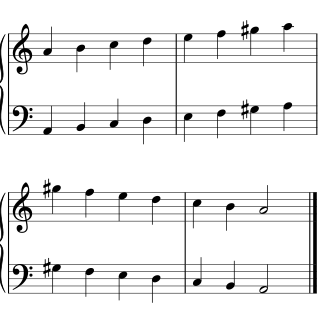
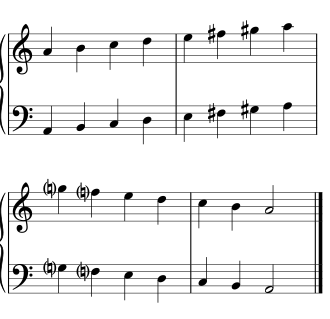
Only the natural minor is shown for each key below. Raise its 7th note for the harmonic form, and its 6th and 7th going up for the melodic.
Every key on the grand staff
Each signature with its major scale and its minor scale, both hands, up an octave and down again, in the order round the circle: no sharps or flats, then the sharps, then the flats.
C major and A minor
no sharps or flats
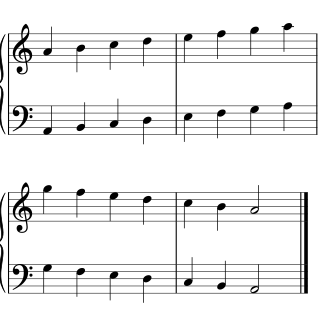
109 of the 341 library pieces are written with this signature; the easiest: Theme from the Sonata in A, K. 331 (Mozart, level 2), Old German Dance (Praetorius, level 2) and Ode to Joy (Beethoven, level 2).
G major and E minor
1 sharp: F♯
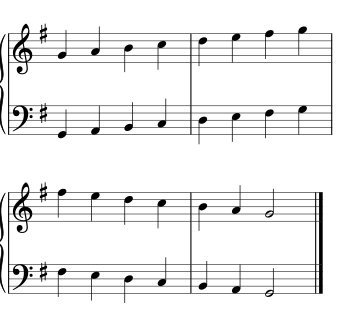
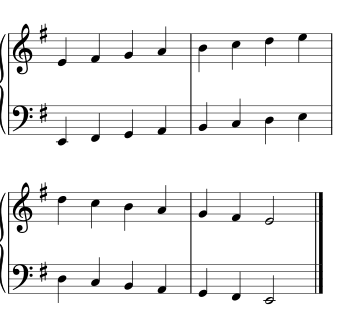
60 of the 341 library pieces are written with this signature; the easiest: Air from Little Russia, Op. 107 No. 3 (Beethoven, level 2), Old Hundredth (Bourgeois, level 3) and Soldiers' March, Op. 68 No. 2 (Schumann, level 3).
D major and B minor
2 sharps: F♯ and C♯
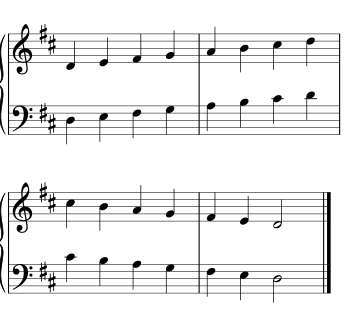
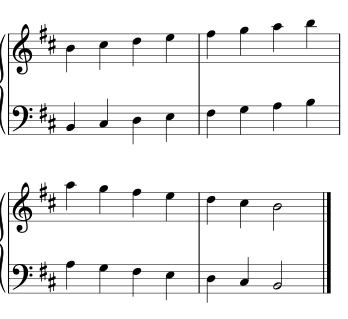
38 of the 341 library pieces are written with this signature; the easiest: Oh! Susanna (Foster, level 2), As Joseph Was A-Walking (Traditional, level 3) and Elementary Study, Op. 176 No. 9 (Duvernoy, level 3).
A major and F♯ minor
3 sharps: F♯, C♯ and G♯
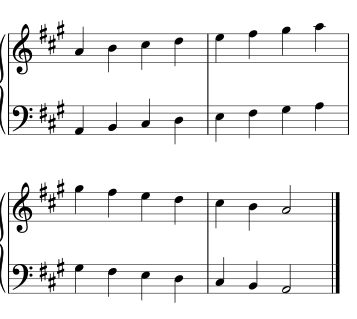
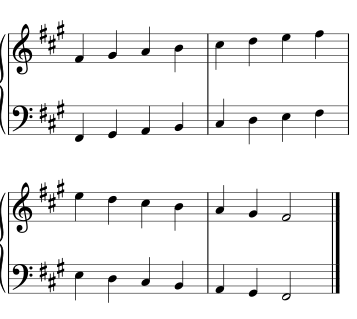
15 of the 341 library pieces are written with this signature; the easiest: Spring, from The Four Seasons (simple arrangement) (Vivaldi, level 2), I Sing the Mighty Power of God (Traditional, level 3) and Minuet in A, Hob. IX:8 No. 6 (Haydn, level 3).
E major and C♯ minor
4 sharps: F♯, C♯, G♯ and D♯
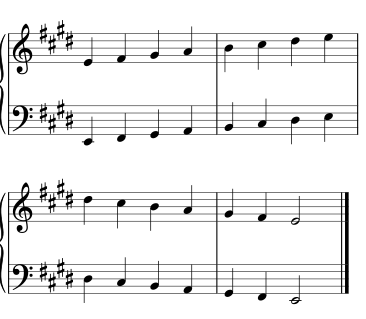
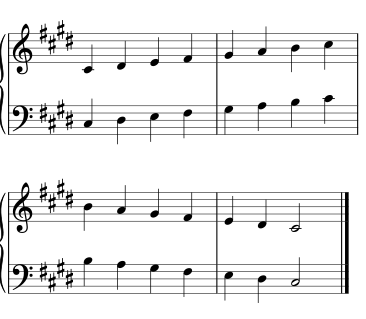
12 of the 341 library pieces are written with this signature; the easiest: Children's Study, Op. 37 No. 39 (Lemoine, level 4), Spring Song, Op. 68 No. 15 (Schumann, level 4) and Consolation No. 1 (Liszt, level 4).
B major and G♯ minor
5 sharps: F♯, C♯, G♯, D♯ and A♯
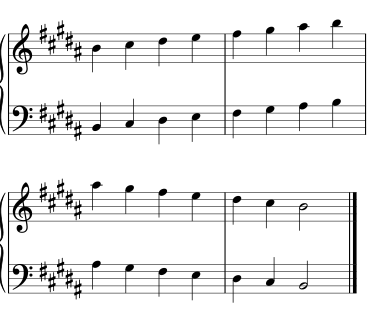
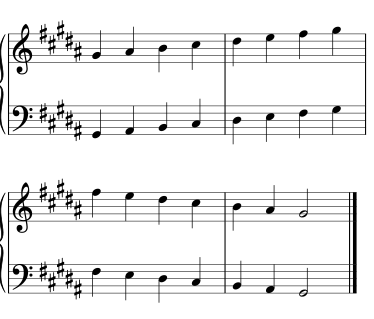
None of the 341 library pieces are written with this signature.
F♯ major and D♯ minor
6 sharps: F♯, C♯, G♯, D♯, A♯ and E♯
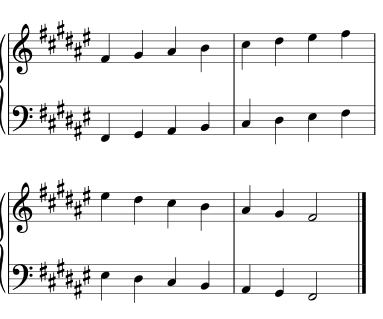
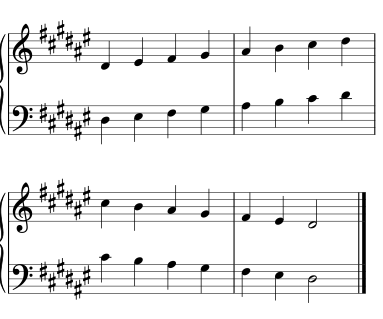
None of the 341 library pieces are written with this signature.
C♯ major and A♯ minor
7 sharps: F♯, C♯, G♯, D♯, A♯, E♯ and B♯
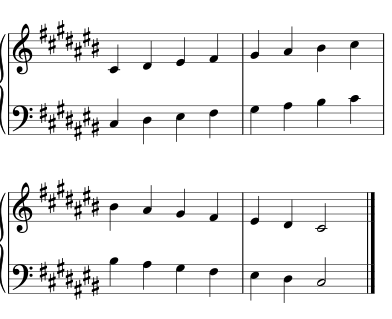
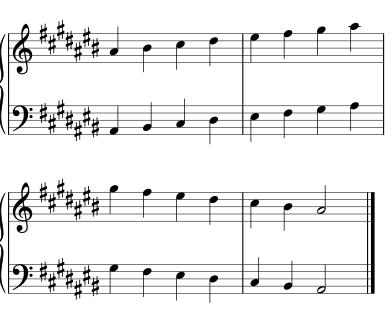
None of the 341 library pieces are written with this signature.
F major and D minor
1 flat: B♭
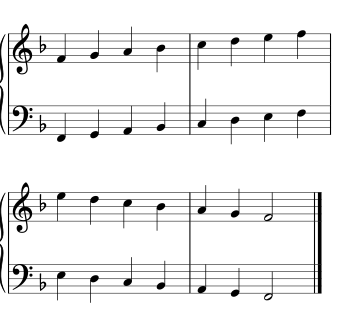
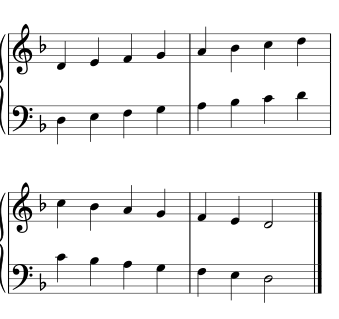
54 of the 341 library pieces are written with this signature; the easiest: We Wish You a Merry Christmas (Traditional, level 2), Minuet in F (Mozart, level 2) and Sinterklaas Kapoentje (Traditional, level 2).
B♭ major and G minor
2 flats: B♭ and E♭
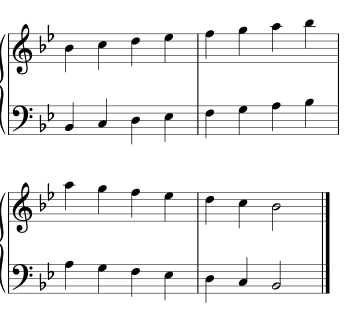
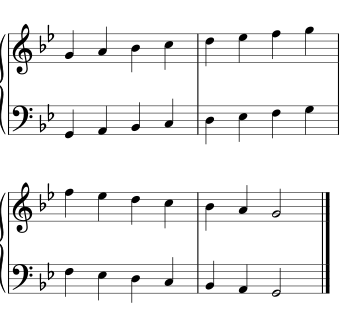
30 of the 341 library pieces are written with this signature; the easiest: Hornpipe in G minor (Purcell, level 3), Old French Song, Op. 39 No. 16 (Tchaikovsky, level 3) and Impertinence, HWV 494 (Handel, level 3).
E♭ major and C minor
3 flats: B♭, E♭ and A♭
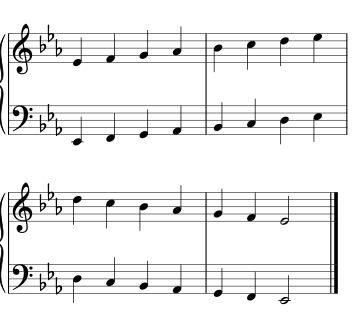
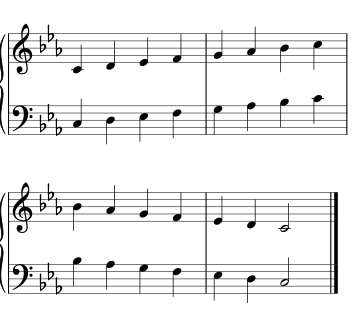
16 of the 341 library pieces are written with this signature; the easiest: This Is My Father's World (Traditional, level 3), Minuet in C minor, BWV Anh. 121 (Anonymous, level 3) and March in E flat, BWV Anh. 127 (Anonymous, level 3).
A♭ major and F minor
4 flats: B♭, E♭, A♭ and D♭
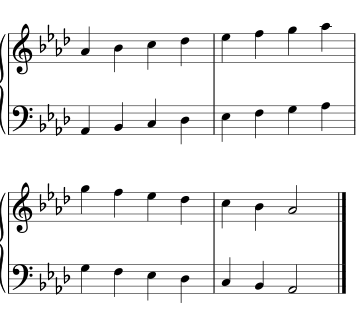
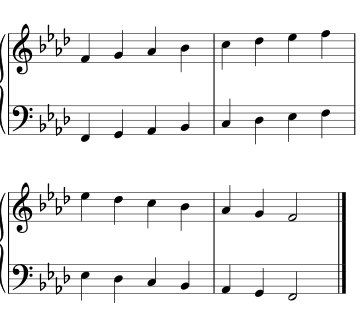
6 of the 341 library pieces are written with this signature; the easiest: Jesus Calls Us o'er the Tumult (Jude, level 3), Moment musical in F minor, Op. 94 No. 3 (Schubert, level 4) and Sonata in F minor, Op. 2 No. 1: I (Beethoven, level 5).
D♭ major and B♭ minor
5 flats: B♭, E♭, A♭, D♭ and G♭
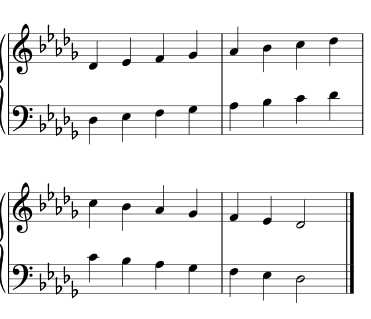
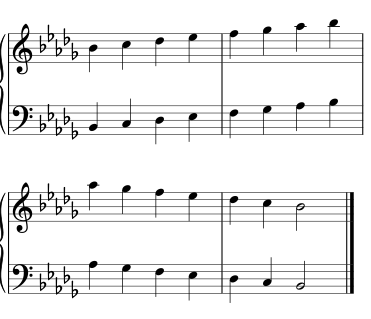
None of the 341 library pieces are written with this signature.
G♭ major and E♭ minor
6 flats: B♭, E♭, A♭, D♭, G♭ and C♭
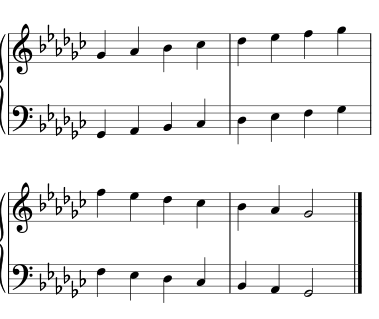
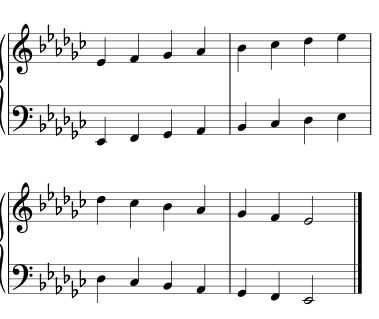
1 of the 341 library pieces are written with this signature; the easiest: La plus que lente (Debussy, level 5).
C♭ major and A♭ minor
7 flats: B♭, E♭, A♭, D♭, G♭, C♭ and F♭
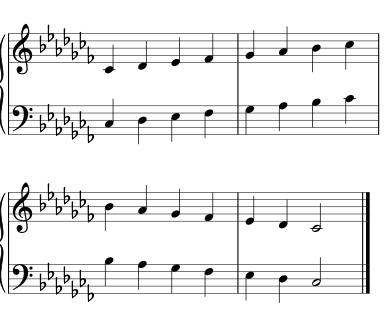
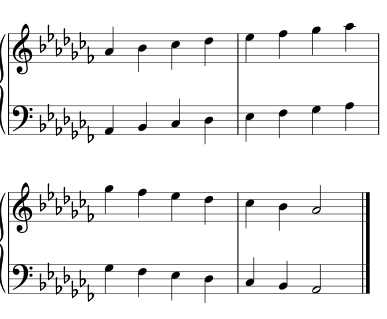
None of the 341 library pieces are written with this signature.
The trap
Naming a piece's key from its signature alone. 1 sharp is G major or E minor, and the signature can't say which. Look at the last note in the bass, which is nearly always the key note, and for the minor key's raised 7th note (E minor's is D♯) as accidentals through the piece.
Now read them. A drill of the 14 key signatures in this guide: play each card on a MIDI keyboard or the keys on screen as soon as you can read it. Every answer is timed and goes on your reading map.
Start the drillOn paper: a printable key signature worksheet, with the answers on a second page.