Piano songs with letters
37 pieces adults ask for by name, each on its real sheet music with every note's letter printed under it, easiest first. Not letter tabs: the notes stay on the staff, so the letters help you start and the page teaches you to read.
- Pieces
- 37
- Levels
- 2 to 7
- Key signatures
- 5 flats to 4 sharps
- Length
- 16 to 145 bars
Using the letters, then leaving them
A row of letters tells you which key, and nothing else. The note above each letter also tells you how long to hold it, which hand plays it and whether the tune climbs or falls, all at a glance. That is why each page keeps the music and puts the letters underneath.
Play a piece with its letters once or twice, until you know how it goes. Then drill the notes it uses (each page has a drill of exactly those notes) and print it without the letters. Each row says how many notes the piece asks you to know, from 10 to 45: start with the fewest, and the notes you learn carry over to the next piece.
How letter names work, with sharps, flats and the other systems (do re mi, German H): piano note names.
Level 2
A tune over a simple left hand, mostly in one hand position.
-
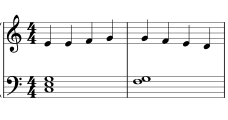 Ode to Joy
Ludwig van Beethoven no sharps or flats, 4/4, 16 bars
10 notes to know -
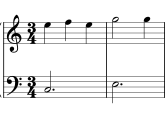 Theme from the Sonata in A, K. 331
Wolfgang Amadeus Mozart no sharps or flats, 3/4, 16 bars
10 notes to know -
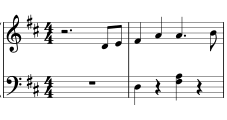 Oh! Susanna
Stephen Foster 2 sharps, 4/4, 17 bars
13 notes to know -
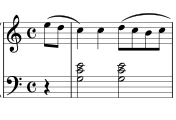 Papageno's Aria, from The Magic Flute
Wolfgang Amadeus Mozart no sharps or flats, 4/4, 23 bars
22 notes to know -
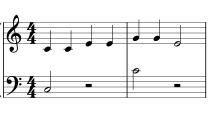 Theme from the Surprise Symphony
Joseph Haydn no sharps or flats, 4/4, 24 bars
21 notes to know -
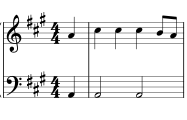 Spring, from The Four Seasons (simple arrangement)
Antonio Vivaldi 3 sharps, 4/4, 27 bars
13 notes to know -
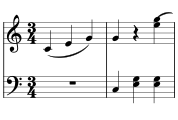 The Blue Danube (theme)
Johann Strauss II no sharps or flats, 3/4, 32 bars
24 notes to know
Level 3
Both hands busy, the hand moves around, a sharp or flat or two.
-
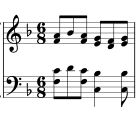 Wiegenlied (Lullaby)
Bernhard Flies 1 flat, 6/8, 16 bars
23 notes to know -
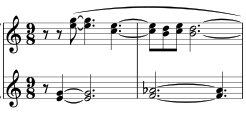 Clair de lune
Claude Debussy no sharps or flats, 9/8, 17 bars
14 notes to know -
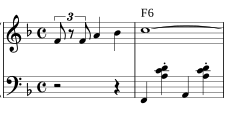 When the Saints Go Marching In
Traditional 1 flat, 4/4, 18 bars
22 notes to know -
 The Happy Farmer, Op. 68 No. 10
Robert Schumann 1 flat, 4/4, 21 bars
23 notes to know -
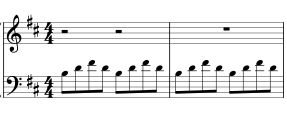 Swan Lake (theme)
Pyotr Ilyich Tchaikovsky 2 sharps, 4/4, 27 bars
21 notes to know -
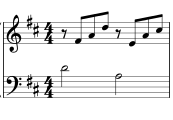 Canon in D
Johann Pachelbel 2 sharps, 4/4, 33 bars, shortened
33 notes to know -
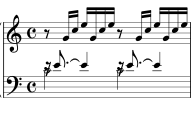 Prelude in C, BWV 846
Johann Sebastian Bach no sharps or flats, 4/4, 35 bars
29 notes to know -
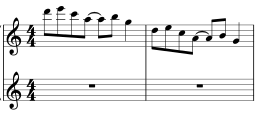 The Entertainer
Scott Joplin no sharps or flats, 4/4, 37 bars, shortened
19 notes to know -
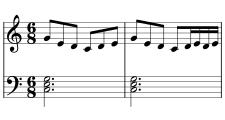 Morning Mood, from Peer Gynt
Edvard Grieg no sharps or flats, 6/8, 38 bars, shortened
35 notes to know -
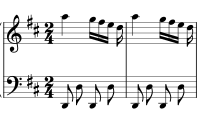 Musette in D, BWV Anh. 126
Anonymous (Notebook for Anna Magdalena Bach) 2 sharps, 2/4, 40 bars
23 notes to know -
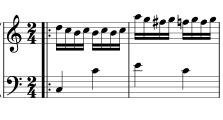 Ah vous dirai-je, Maman: Variation I
Wolfgang Amadeus Mozart no sharps or flats, 2/4, 48 bars
21 notes to know -
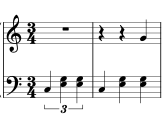 Brindisi, from La traviata
Giuseppe Verdi no sharps or flats, 3/4, 52 bars, shortened
21 notes to know -
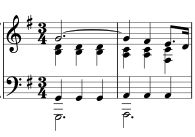 Largo (Ombra mai fu), from Serse
George Frideric Handel 1 sharp, 3/4, 52 bars
35 notes to know -
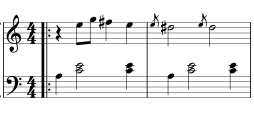 Gnossienne No. 1
Erik Satie no sharps or flats, 4/4, 54 bars
18 notes to know -
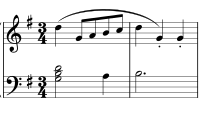 Minuet in G, BWV Anh. 114
Christian Petzold 1 sharp, 3/4, 64 bars
26 notes to know -
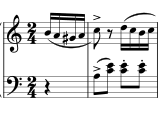 Rondo alla turca (Turkish March)
Wolfgang Amadeus Mozart no sharps or flats, 2/4, 65 bars, shortened
25 notes to know -
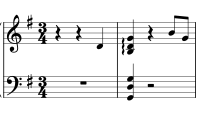 Amazing Grace
Traditional 1 sharp, 3/4, 87 bars
43 notes to know
Level 4
Real independence between the hands and more accidentals.
-
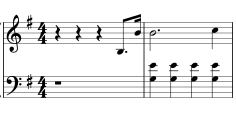 Prelude in E minor, Op. 28 No. 4
Frédéric Chopin 1 sharp, 4/4, 26 bars
31 notes to know -
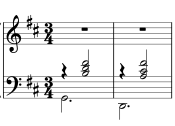 Gymnopédie No. 1
Erik Satie 2 sharps, 3/4, 78 bars
35 notes to know -
 Ständchen (Serenade)
Franz Schubert 1 flat, 3/4, 82 bars
39 notes to know -
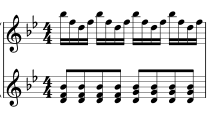 The Arrival of the Queen of Sheba
George Frideric Handel 2 flats, 4/4, 89 bars
24 notes to know -
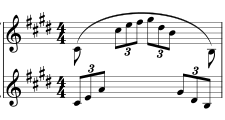 Arabesque No. 1
Claude Debussy 4 sharps, 4/4, 106 bars
22 notes to know -
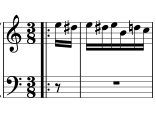 Für Elise, WoO 59
Ludwig van Beethoven no sharps or flats, 3/8, 126 bars
41 notes to know -
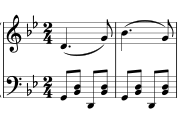 Hungarian Dance No. 5
Johannes Brahms 2 flats, 2/4, 142 bars
40 notes to know
Level 5
The edge of early intermediate: dense textures, fast passages and far keys.
-
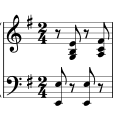 Dance of the Sugar Plum Fairy
Pyotr Ilyich Tchaikovsky 1 sharp, 2/4, 52 bars
43 notes to know -
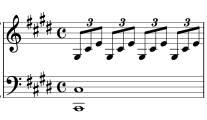 Moonlight Sonata: I
Ludwig van Beethoven 4 sharps, 4/4, 69 bars
37 notes to know -
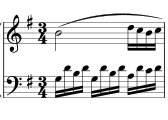 Sonata in C, K. 545: II
Wolfgang Amadeus Mozart 1 sharp, 3/4, 106 bars
30 notes to know -
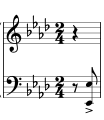 Maple Leaf Rag
Scott Joplin 4 flats, 2/4, 145 bars
40 notes to know
Level 6
Intermediate: the notes of level 5 at concert speed, held even from the first bar to the last.
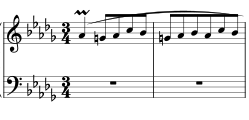
Level 7
Advanced: études and impromptus, fast and even in both hands for pages at a time, with cross-rhythms.
The same pieces as they are written, with their easier versions: Famous classical piano pieces · Easy piano pieces for adult beginners.