Easy piano pieces for adult beginners
Music an adult already knows by ear, at levels 2 and 3, so the first pieces you read are ones you wanted to play: the Ode to Joy, the theme of Haydn's Surprise Symphony and Oh! Susanna at level 2; at level 3, the Minuet in G from the Anna Magdalena Notebook, Bach's Prelude in C, Twinkle, Twinkle in Mozart's first variation, the Turkish March, Satie's first Gnossienne and When the Saints Go Marching In. None of them is an exercise. Each has versions with fewer notes made from the score itself (the right-hand melody alone, then with left-hand roots), so you can start any of them a step down and play it as written later.
- Pieces
- 15
- Levels
- 2 to 3
- Key signatures
- 1 flat to 2 sharps
- Length
- 16 to 87 bars
Starting as an adult
An adult beginner usually understands more than their hands can do yet: you know how Für Elise should sound long before your left hand can keep it going. That is the reason to read rather than copy by ear. Reading lets you start a piece below where your ear is, at a version your hands can manage, and climb to the score as written.
Find your level first. The three-minute piano level test plays notes and shapes on the staff and finds what you already read, so a returning player who learned as a child doesn't start on middle C again. Then choose a piece here that you want to hear yourself play, open it, and print or play the version that fits: the right-hand melody alone is a real piece, not a lesser one.
Play slowly enough that you never stop. A steady, slow take with a few wrong notes teaches more than a fast one that halts at every bar, and the player marks early and late notes against your own beat, not against a recording. Ten minutes most days does more than an hour once a week; the pieces here are short enough that one fits in a session.
Level 2
A tune over a simple left hand, mostly in one hand position.
-
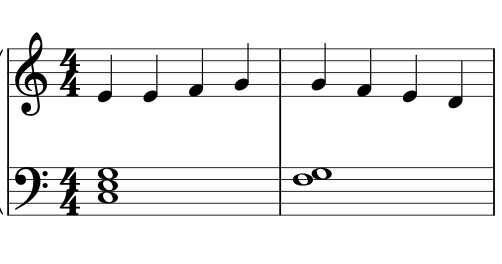 Ode to Joy
Ludwig van Beethoven no sharps or flats, 4/4, 16 bars Community source -
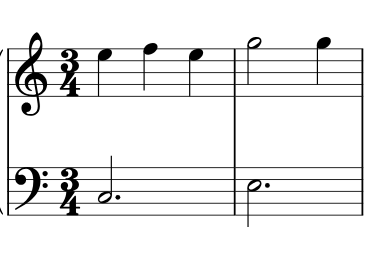 Theme from the Sonata in A, K. 331
Wolfgang Amadeus Mozart no sharps or flats, 3/4, 16 bars Community source -
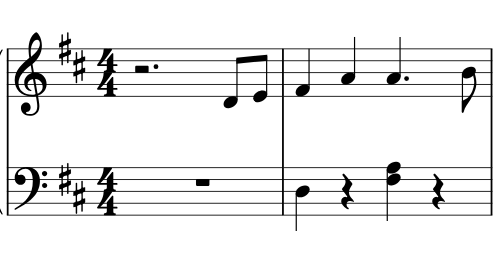 Oh! Susanna
Stephen Foster 2 sharps, 4/4, 17 bars Community source -
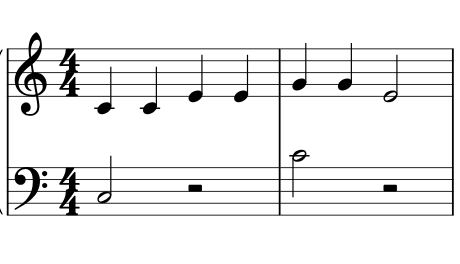 Theme from the Surprise Symphony
Joseph Haydn no sharps or flats, 4/4, 24 bars Community source
Level 3
Both hands busy, the hand moves around, a sharp or flat or two.
-
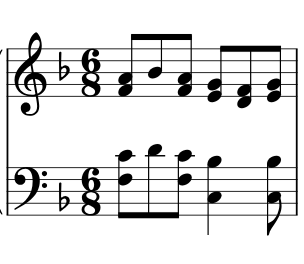 Wiegenlied (Lullaby)
Bernhard Flies 1 flat, 6/8, 16 bars Community source -
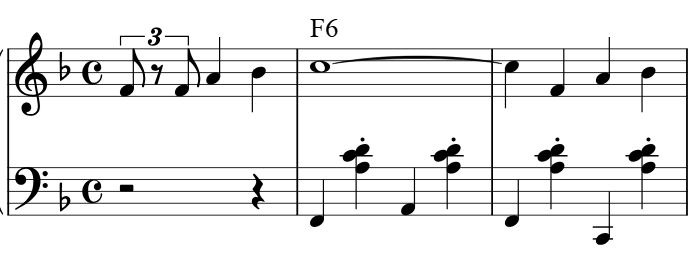 When the Saints Go Marching In
Traditional 1 flat, 4/4, 18 bars Community source -
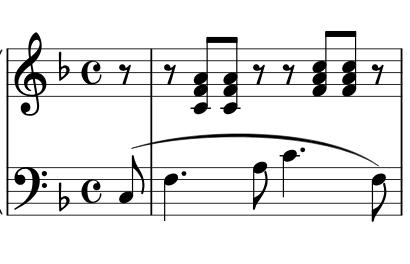 The Happy Farmer, Op. 68 No. 10
Robert Schumann 1 flat, 4/4, 20 bars Two sources agree -
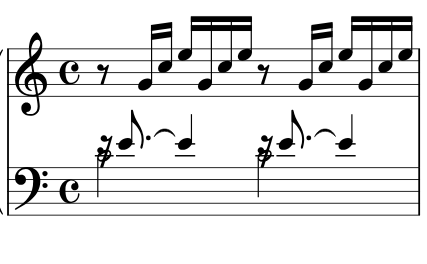 Prelude in C, BWV 846
Johann Sebastian Bach no sharps or flats, 4/4, 35 bars Two sources agree -
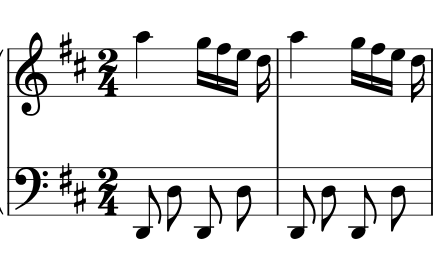 Musette in D, BWV Anh. 126
Anonymous (Notebook for Anna Magdalena Bach) 2 sharps, 2/4, 20 bars Checked against the edition -
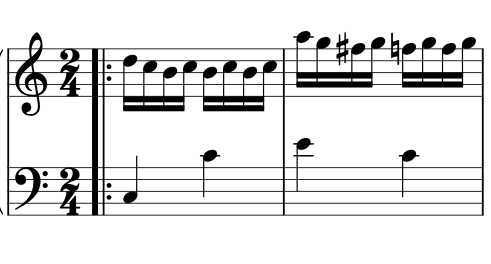 Ah vous dirai-je, Maman: Variation I
Wolfgang Amadeus Mozart no sharps or flats, 2/4, 25 bars Community source -
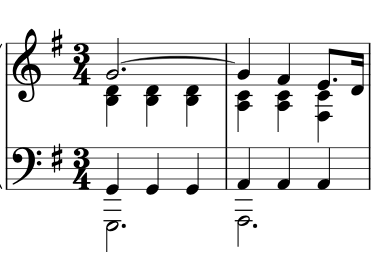 Largo (Ombra mai fu), from Serse
George Frideric Handel 1 sharp, 3/4, 52 bars Community source -
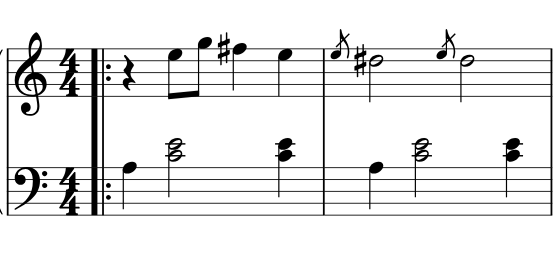 Gnossienne No. 1
Erik Satie no sharps or flats, 4/4, 31 bars Community source -
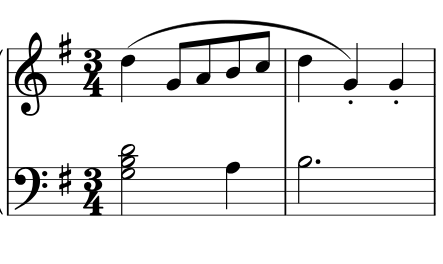 Minuet in G, BWV Anh. 114
Christian Petzold 1 sharp, 3/4, 32 bars Two sources agree -
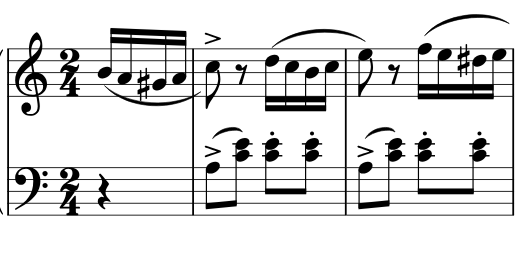 Rondo alla turca (Turkish March)
Wolfgang Amadeus Mozart no sharps or flats, 2/4, 34 bars, shortened Community source -
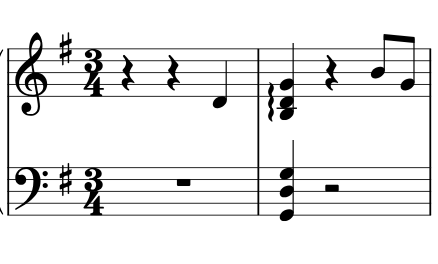 Amazing Grace
Traditional 1 sharp, 3/4, 87 bars Community source
Each piece here is also printed with every note's letter under it: piano sheet music with letters.
Open a piece to print any of its versions free, or to play it at your MIDI keyboard with every note marked. New to reading? The level 2 sight-reading exercises are a good warm-up.
Learning with someone? Send them this page by email