Sad piano pieces
Slow, sorrowful music to read at the keyboard, from level 2 to level 6. Most of it is in a minor key: Chopin's Preludes in E minor and C minor, the first movement of the Moonlight Sonata, Schumann's First Loss and Poor Orphan Child, Tchaikovsky's The Sick Doll and The Doll's Burial, Burgmüller's Farewell and Gentle Complaint, Greensleeves and Chopin's funeral march. One is not: Satie marked his first Gymnopédie “Lent et douloureux”, slow and sorrowful, though it is in D major. Each piece has easier versions made from the score itself, starting with the melody alone.
- Pieces
- 26
- Levels
- 2 to 6
- Key signatures
- 3 flats to 4 sharps
- Length
- 13 to 177 bars
Chosen from the library's own data, then read one by one: pieces in a minor key at a slow or moderate pace, and the Gymnopédie. A lively minor piece, a polonaise or a tarantella, is left out. Under each piece are its key and the tempo word its score prints.
Playing a sad piece
Sad music is mostly slow music, and slow music is where readers rush. Count the long notes out in full and keep the beat steady through the rests: the feeling comes from the time you leave, not from slowing down at random. Let the end of each phrase fall a little softer, as a voice does at the end of a sentence.
Minor keys bring accidentals. In A minor the G is often sharp, in E minor the D: read the key signature, then expect the seventh note of the scale to be raised, and the sign in the score won't catch you out.
Play softly but not timidly, since the melody still has to sing over the accompaniment. If both hands at once feel heavy, start with the melody alone; the easier versions are made for that.
Level 2
A tune over a simple left hand, mostly in one hand position.
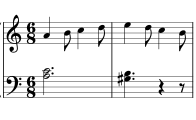
Level 3
Both hands busy, the hand moves around, a sharp or flat or two.
-
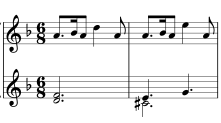 The poor Child, Op. 117 No. 28
Cornelius Gurlitt 1 flat, 6/8, 16 bars
D minor, Moderato -
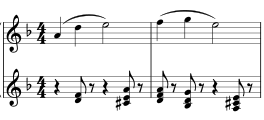 Folk Song, Op. 68 No. 9
Robert Schumann 1 flat, 4/4, 24 bars
D minor -
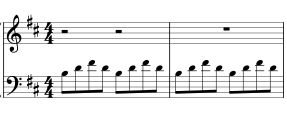 Swan Lake (theme)
Pyotr Ilyich Tchaikovsky 2 sharps, 4/4, 27 bars
B minor -
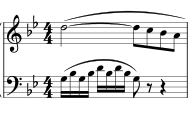 Gentle Complaint, Op. 100 No. 16
Friedrich Burgmüller 2 flats, 4/4, 32 bars
G minor -
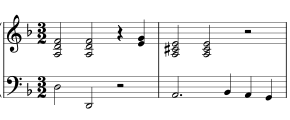 Sarabande, HWV 437
George Frideric Handel 1 flat, 3/2, 32 bars
D minor -
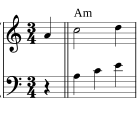 Greensleeves
Traditional no sharps or flats, 3/4, 33 bars
A minor -
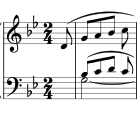 Old French Song, Op. 39 No. 16
Pyotr Ilyich Tchaikovsky 2 flats, 2/4, 33 bars
G minor, Moderato assai -
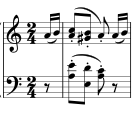 Poor Orphan Child, Op. 68 No. 6
Robert Schumann no sharps or flats, 2/4, 33 bars
A minor -
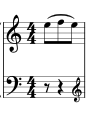 Farewell, Op. 100 No. 12
Friedrich Burgmüller no sharps or flats, 4/4, 42 bars
A minor -
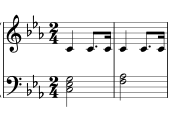 The Doll's Burial, Op. 39 No. 7
Pyotr Ilyich Tchaikovsky 3 flats, 2/4, 48 bars
C minor -
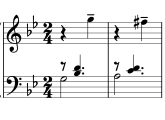 The Sick Doll, Op. 39 No. 6
Pyotr Ilyich Tchaikovsky 2 flats, 2/4, 58 bars
G minor -
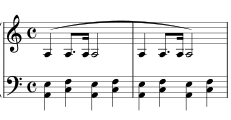 Funeral March, from the Sonata No. 2
Frédéric Chopin no sharps or flats, 4/4, 108 bars
A minor
Level 4
Real independence between the hands and more accidentals.
-
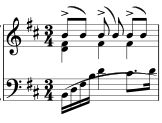 Prelude in B minor, Op. 28 No. 6
Frédéric Chopin 2 sharps, 3/4, 26 bars
B minor -
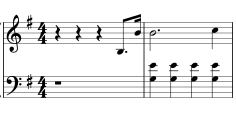 Prelude in E minor, Op. 28 No. 4
Frédéric Chopin 1 sharp, 4/4, 26 bars
E minor, Largo -
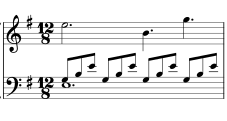 Nocturne No. 10
John Field 1 sharp, 12/8, 37 bars
E minor, Adagio -
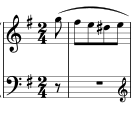 First Loss, Op. 68 No. 16
Robert Schumann 1 sharp, 2/4, 49 bars
E minor -
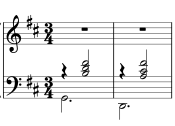 Gymnopédie No. 1
Erik Satie 2 sharps, 3/4, 78 bars
D major -
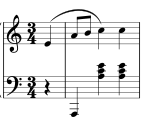 Waltz in A minor, B. 150
Frédéric Chopin no sharps or flats, 3/4, 81 bars
A minor, Allegretto -
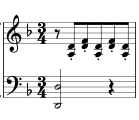 Ständchen (Serenade)
Franz Schubert 1 flat, 3/4, 82 bars
D minor, Moderato -
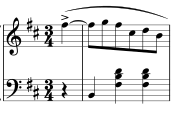 Waltz in B minor
Frédéric Chopin 2 sharps, 3/4, 177 bars
B minor, Moderato
Level 5
The edge of early intermediate: dense textures, fast passages and far keys.
-
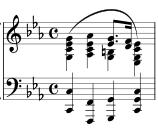 Prelude in C minor, Op. 28 No. 20
Frédéric Chopin 3 flats, 4/4, 13 bars
C minor, Largo -
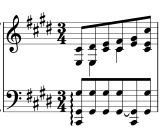 Étude in C sharp minor, Op. 2 No. 1
Alexander Scriabin 4 sharps, 3/4, 45 bars
C♯ minor, Andante -
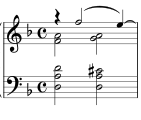 October: Autumn Song, Op. 37a No. 10
Pyotr Ilyich Tchaikovsky 1 flat, 4/4, 56 bars
1 flat, Andante doloroso e molto cantabile -
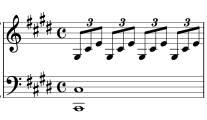 Moonlight Sonata: I
Ludwig van Beethoven 4 sharps, 4/4, 69 bars
C♯ minor
Level 6
Intermediate: the notes of level 5 at concert speed, held even from the first bar to the last.
Open a piece to print any of its versions free, or to play it at your MIDI keyboard with every note marked. New to reading? The level 2 sight-reading exercises are a good warm-up.