Folk songs and spirituals for piano
Traditional tunes and the composers who set them, to read at the keyboard from level 2 to level 4: Greensleeves, the English tune of the sixteenth century also sung as What Child Is This?, The Irish Rover, the Dutch children's song Sinterklaas Kapoentje, and two African American spirituals, When the Saints Go Marching In and It's Me, O Lord. The tunes everyone knows by name are here too: Twinkle, Twinkle, Little Star, Jane Taylor's poem of 1806 sung to a French tune, at level 2; at level 3, the English ballad Scarborough Fair and the Londonderry Air, an Irish tune first printed in 1855; and at level 4 Danny Boy, the same Irish tune with Frederic Weatherly's words of 1913. Seven Swedish folk dances, six polskas and a walking tune, come from Traditioner af Swenska Folk-Dansar, a collection printed in 1814 and 1815. Three composers' settings of folk tunes sit beside them: Beethoven's Air from Little Russia, a Ukrainian tune (Little Russia was an old name for Ukraine), Brahms's In stiller Nacht, a German folk song, and the sash dance from Bartók's Romanian Folk Dances, tunes he collected himself. Each piece has versions with fewer notes made from the score itself, starting with the melody alone.
- Pieces
- 19
- Levels
- 2 to 4
- Key signatures
- 3 flats to 2 sharps
- Length
- 8 to 32 bars
Reading a folk tune
A folk tune is made to be remembered, so it repeats itself. Most are built from four-bar phrases, and a later phrase often begins like the first. Read the first phrase carefully, then read each next one for what is the same and what changes: half the page is often a phrase you have already read. The left hand usually keeps to a few chords, so look for the bars where it changes and leave it alone in between.
The dances want a steady beat more than speed. A polska is in three, the walking tune and It's Me, O Lord in two, so count a bar aloud before you start and keep counting through the held notes. Start with the melody alone if both hands together feel busy; the versions with fewer notes are made for that.
Level 2
A tune over a simple left hand, mostly in one hand position.
-
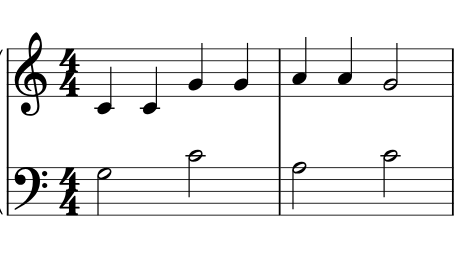 Twinkle, Twinkle, Little Star
Traditional no sharps or flats, 4/4, 12 bars Community source -
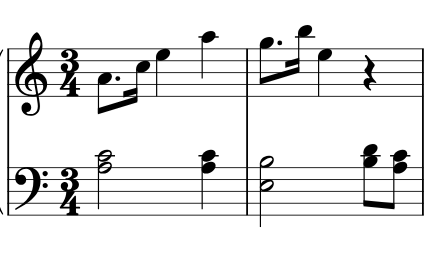 Polska from Småland
Traditional no sharps or flats, 3/4, 8 bars Community source -
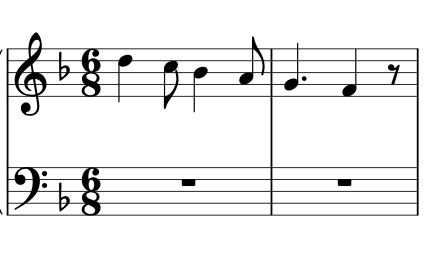 Sinterklaas Kapoentje
Traditional 1 flat, 6/8, 20 bars Community source -
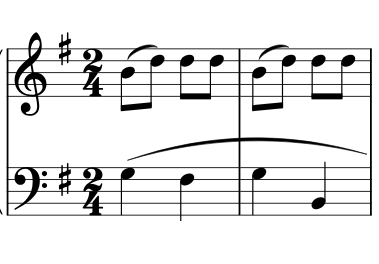 Air from Little Russia, Op. 107 No. 3
Ludwig van Beethoven 1 sharp, 2/4, 16 bars Community source
Level 3
Both hands busy, the hand moves around, a sharp or flat or two.
-
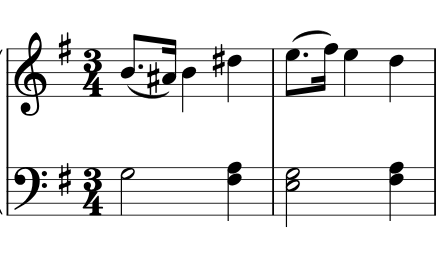 Polska from Lappland
Traditional 1 sharp, 3/4, 8 bars Community source -
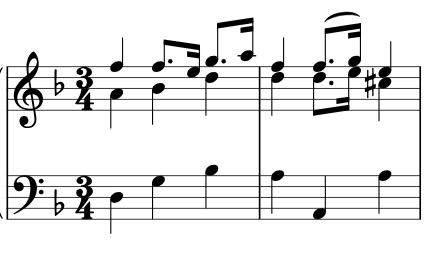 Polska from Värmland
Traditional 1 flat, 3/4, 8 bars Community source -
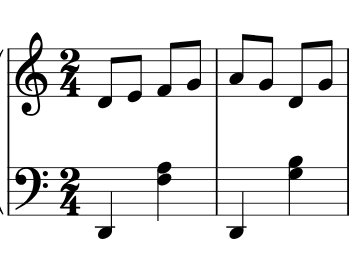 Romanian Folk Dance No. 2
Béla Bartók no sharps or flats, 2/4, 16 bars Community source -
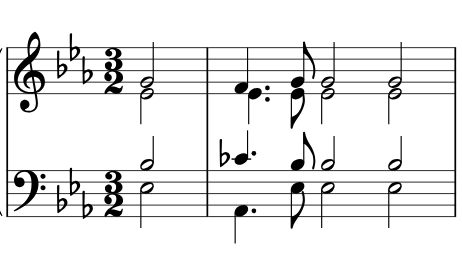 In stiller Nacht
Johannes Brahms 3 flats, 3/2, 16 bars Community source -
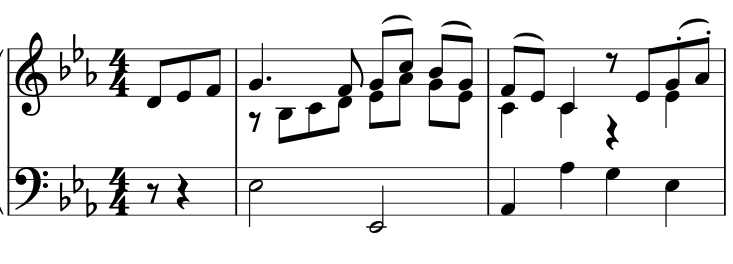 Londonderry Air
Traditional 3 flats, 4/4, 17 bars Community source -
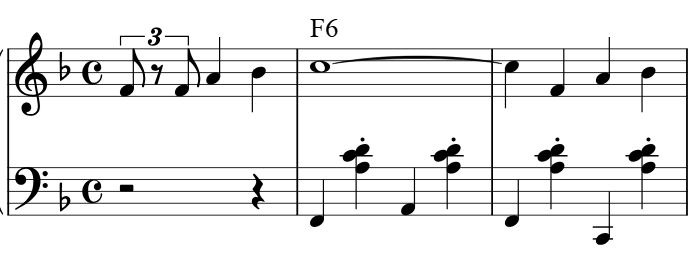 When the Saints Go Marching In
Traditional 1 flat, 4/4, 18 bars Community source -
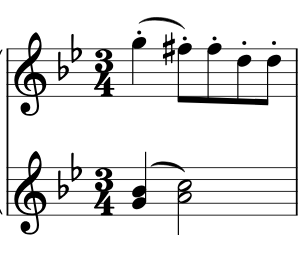 Polska from Norrbotten
Traditional 2 flats, 3/4, 12 bars Community source -
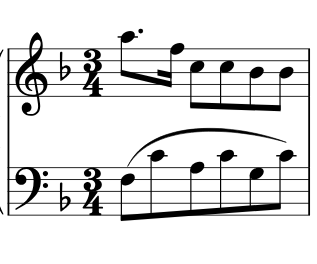 Polska from Dalarna
Traditional 1 flat, 3/4, 14 bars Community source -
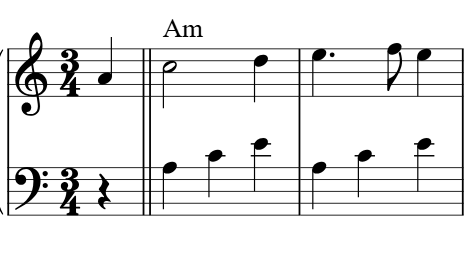 Greensleeves
Traditional no sharps or flats, 3/4, 32 bars Community source -
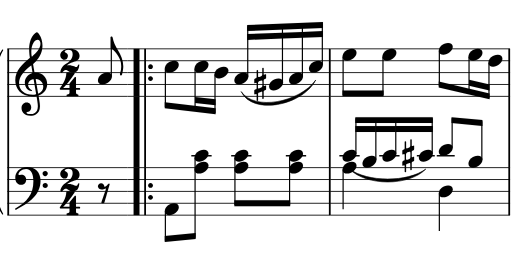 Walking Tune from Dalarna
Traditional no sharps or flats, 2/4, 18 bars Community source -
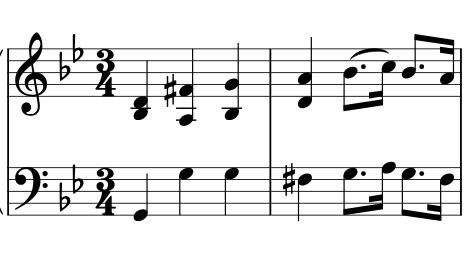 Polska from Hälsingland
Traditional 2 flats, 3/4, 18 bars Community source -
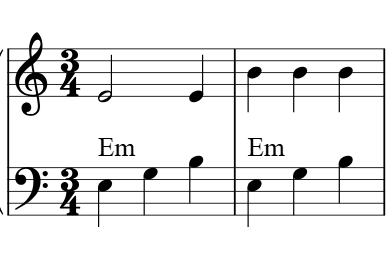 Scarborough Fair
Traditional no sharps or flats, 3/4, 18 bars Community source -
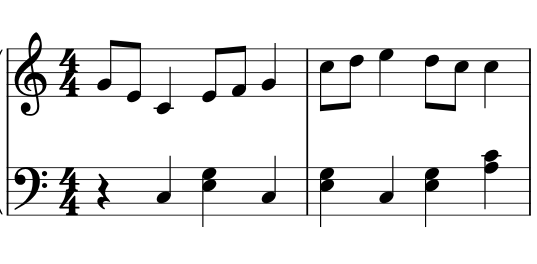 The Irish Rover
Traditional no sharps or flats, 4/4, 20 bars Community source
Level 4
Real independence between the hands and more accidentals.
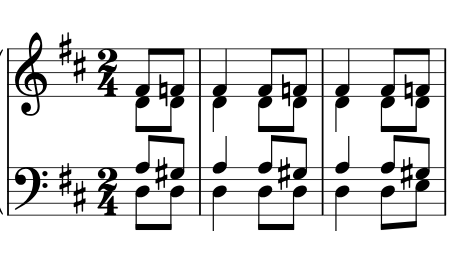
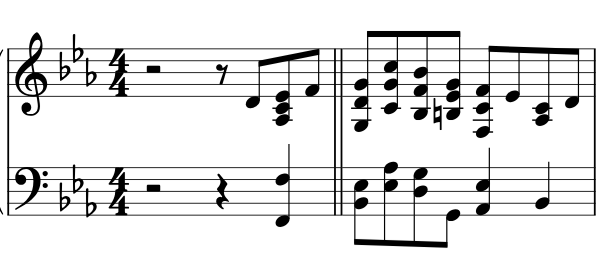
Each piece here is also printed with every note's letter under it: piano sheet music with letters.
Open a piece to print any of its versions free, or to play it at your MIDI keyboard with every note marked. New to reading? The level 2 sight-reading exercises are a good warm-up.
Learning with someone? Send them this page by email