ABRSM Grade 5 sight-reading
Four piano sight-reading tests written to ABRSM's published rules for Grade 5. Print them, or play one at your MIDI keyboard and get every note marked, then ask for a new one.
A short unaccompanied piece the candidate hasn't seen before. There is half a minute to look through it and try out any of it before playing it for the examiner. Any fingering printed is a guide only.
Playing one needs a MIDI keyboard and Chrome, Edge or Firefox on a computer, or Chrome on an Android phone or tablet. Printing needs nothing. No keyboard yet? Which keyboard to buy.
What the test can ask for
| ABRSM Grade 5 | These tests | |
|---|---|---|
| Length | About 8 to 12 bars | 8 bars |
| Time | 4/4, 2/4, 3/4, 3/8 and 6/8 | The same |
| Keys | C, G, F, D, A, B♭, E♭, E and A♭ major; D, A, E, G, B, F♯ and C minor | The same |
| Hands | The hands play together and move outside a five-finger position | The same |
| Note values | Half notes (minims), quarter notes (crotchets), eighth notes in pairs (quavers), whole-bar rests, dotted half notes (dotted minims), four eighths beamed together, half and quarter rests, whole notes (semibreves), dotted quarter notes followed by an eighth (dotted crotchet and quaver), tied notes, dotted eighth notes followed by a sixteenth (dotted quaver and semiquaver), simple sixteenth-note patterns (semiquavers) and eighth rests | Half notes (minims), quarter notes (crotchets), eighth notes in pairs (quavers), dotted half notes (dotted minims), whole notes (semibreves), dotted quarter notes followed by an eighth (dotted crotchet and quaver), dotted eighth notes followed by a sixteenth (dotted quaver and semiquaver) and simple sixteenth-note patterns (semiquavers) |
| Also | Legato phrases and staccato, f and p, occasional accidentals (in minor keys only), slurs and accents, mf and mp, cresc. and dim. hairpins, pp, two-note chords in either hand, an anacrusis (an upbeat), chromatic notes, pause signs, tenuto, four-part chords (two notes at most in either hand), simple syncopation, slowing down at the end and ff | Occasional accidentals (in minor keys only) and two-note chords in the left hand |
Not in these: whole-bar rests, four eighths beamed together, half and quarter rests, tied notes and eighth rests; legato phrases and staccato, f and p, slurs and accents, mf and mp, cresc. and dim. hairpins, pp, two-note chords in the right hand, an anacrusis (an upbeat), chromatic notes, pause signs, tenuto, four-part chords (two notes at most in either hand), simple syncopation, slowing down at the end and ff. Practise those from printed music too.
ABRSM's rules from its Piano Practical Grades Syllabus 2025 & 2026, Qualification Specification, pages 15–16 (the same in the 2027 & 2028 syllabus). Clefsight isn't connected with ABRSM or The Royal Conservatory. Clefsight writes these tests to the rules each board publishes for its piano sight-reading test; they aren't the boards' own tests, and a board's real test may use anything its rules allow.
Test 1
Play this one
Test 2
Play this one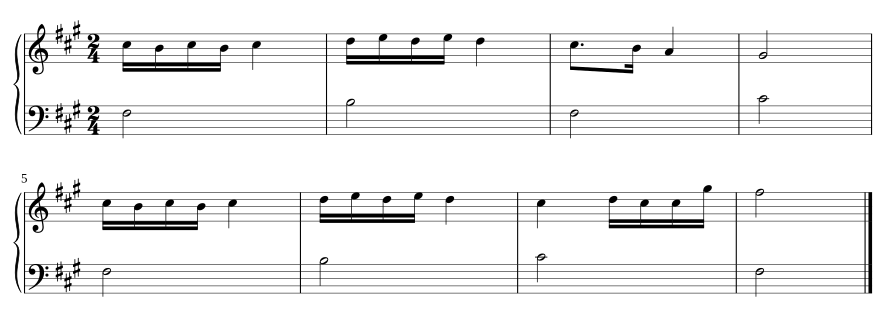
Test 3
Play this one
Test 4
Play this one


ABRSM Grade 5 sight-reading tests from clefsight.com/sight-reading/exams/abrsm-grade-5. Play any of them, or a new one, at a MIDI keyboard there and get every note marked.