Francisco Manuel da Silva (1795–1865)
Hino Nacional Brasileiro
Brazil's national anthem: Francisco Manuel da Silva's march (1831) with Joaquim Osório Duque Estrada's words (1909)
In National anthems and patriotic songs
No speed is printed on this score, so Clefsight plays it at quarter note = 111: the middle speed of the 8 marches and trumpet tunes in the library whose files set one. Its length counts from that.
Plays on a MIDI keyboard in Chrome, Edge or Firefox on a computer, or Chrome on an Android phone or tablet, or on the keys on screen without one.
Versions
Each easier version only leaves notes out and adds none, so every note in it is the piece's own. Print any of them free.
- As written2095 notes
- Melody and a simpler left hand1720 notes
- Melody and left-hand roots842 notes
- Right-hand melody733 notes
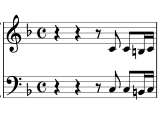
The easy version, the melody and left-hand roots at level 3, engraved on its own page.
To practise it on paper: a practice chart for this piece, a week of steps from each hand alone to full tempo, with their speeds.
What it asks of you
- Treble clef from G3 to B5, with ledger lines
- Bass clef from C2 to F4, with ledger lines
- Key signature: 1 flat (F major or D minor)
- Accidentals: flats outside the key, naturals
- Rhythm: quarter notes, half notes, whole notes, eighth notes, dotted quarter notes, sixteenth notes, triplets, dotted eighth notes
- Intervals: 2nds (steps), 3rds (skips), octaves, 5ths, 4ths, 6ths
- Chords: inverted triads, triads, seventh chords
- Hands playing together, moving the hand to a new position, one hand moving while the other holds, hands taking turns, hands in different rhythms
What stands between you and this piece
Clefsight compares the notes of this piece with what you already read.
Score from PDMX (CC0 1.0); the composition is public domain: Francisco Manuel da Silva died in 1865. This is an arrangement, and the source doesn’t name its arranger. The composition’s rights don’t cover an arrangement: this one is free to use because its uploader released it into the public domain (CC0 1.0). Credits