Louis Gobbaerts (1835–1886)
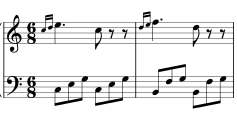
Study in C, Op. 63 No. 4
From Streabbog's Twelve Melodious Studies, Op. 63 (about 1870); Streabbog was the pen name of Louis Gobbaerts
No. 4 of 12 in Streabbog's Twelve Melodious Studies, Op. 63
No speed is printed on this score, so Clefsight plays it at dotted quarter = 61: the middle of the speeds usually quoted for Andante, two thirds of it counted in dotted quarters. Its length counts from that.
Needs a MIDI keyboard and Chrome, Edge or Firefox on a computer, or Chrome on an Android phone or tablet.
Versions
Each easier version only leaves notes out, so every one is still the real piece. Print any of them free.
- As written233 notes
- Melody and a simpler left hand227 notes
- Melody and left-hand roots108 notes
- Right-hand melody76 notes
To practise it on paper: a practice chart for this piece, a week of steps from each hand alone to full tempo, with their speeds.
What it asks of you
- Treble clef from B3 to G5, with ledger lines
- Bass clef from G2 to F4, with ledger lines
- No key signature to keep in mind
- Accidentals: sharps outside the key
- Rhythm: quarter notes, half notes, dotted half notes, eighth notes, dotted quarter notes
- Intervals: 3rds (skips), 5ths, 2nds (steps), 4ths, 6ths, octaves
- Chords: inverted triads
- Hands playing together, one hand moving while the other holds, hands taking turns, moving the hand to a new position
What stands between you and this piece
Clefsight compares the notes of this piece with what you already read.
Score typed for Clefsight from The John Church Company, Cincinnati, 1900, plate 12397 (scan on IMSLP), checked note for note, shared under CC0 1.0; the composition is public domain: Louis Gobbaerts died in 1886. Credits