Waltzes for piano
Waltzes from easy to advanced: Gobbaerts's Carousel Waltz and the theme of the Blue Danube at level 2; Schubert's and Czerny's short waltzes at level 3; Tchaikovsky's Waltz from his Album for the Young, two by Chopin, one of Granados's Valses poéticos and Joplin's concert waltz Bethena at level 4; then Chopin's Minute Waltz, Brahms's Waltz in G and Liszt's first Valse oubliée for later. Each has easier versions made from the score itself (the right-hand melody alone, then with left-hand roots), so you can start a step down and play it as written later.
- Pieces
- 12
- Levels
- 2 to 7
- Key signatures
- 5 flats to 3 sharps
- Length
- 32 to 219 bars
Reading a waltz
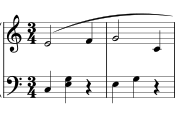
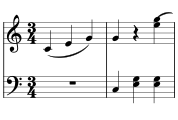
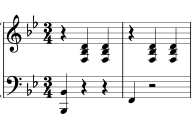
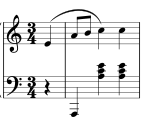
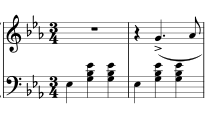
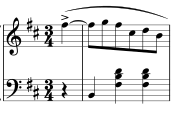
A waltz is in three, and its left hand nearly always does the same thing: a low bass note on the first beat, then a chord on the second and third. Read the bass note, then the chord as one shape; the same chord often stays for two bars or more, so the left hand reads much less than the page looks.
The right hand carries the tune, often a long note on the first beat and movement after it. A Viennese waltz leans a little toward the second beat, and Chopin's bend the tempo; Clefsight grades against your own steady beat, so learn the notes steady first and add the lilt once they are sure.
Level 2
A tune over a simple left hand, mostly in one hand position.
Level 3
Both hands busy, the hand moves around, a sharp or flat or two.
Level 4
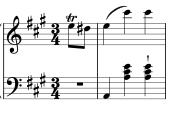
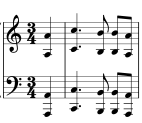
Real independence between the hands and more accidentals.
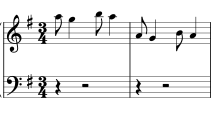
Level 6
Intermediate: the notes of level 5 at concert speed, held even from the first bar to the last.
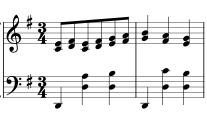
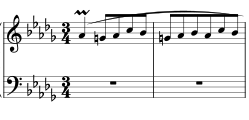
Level 7
Advanced: études and impromptus, fast and even in both hands for pages at a time, with cross-rhythms.
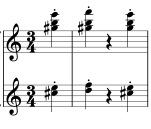
Open a piece to print any of its versions free, or to play it at your MIDI keyboard with every note marked. New to reading? The level 2 sight-reading exercises are a good warm-up.